Editorial Team
Publication Date
October 27, 2025
Nakisanze Segawa, GPJ Uganda
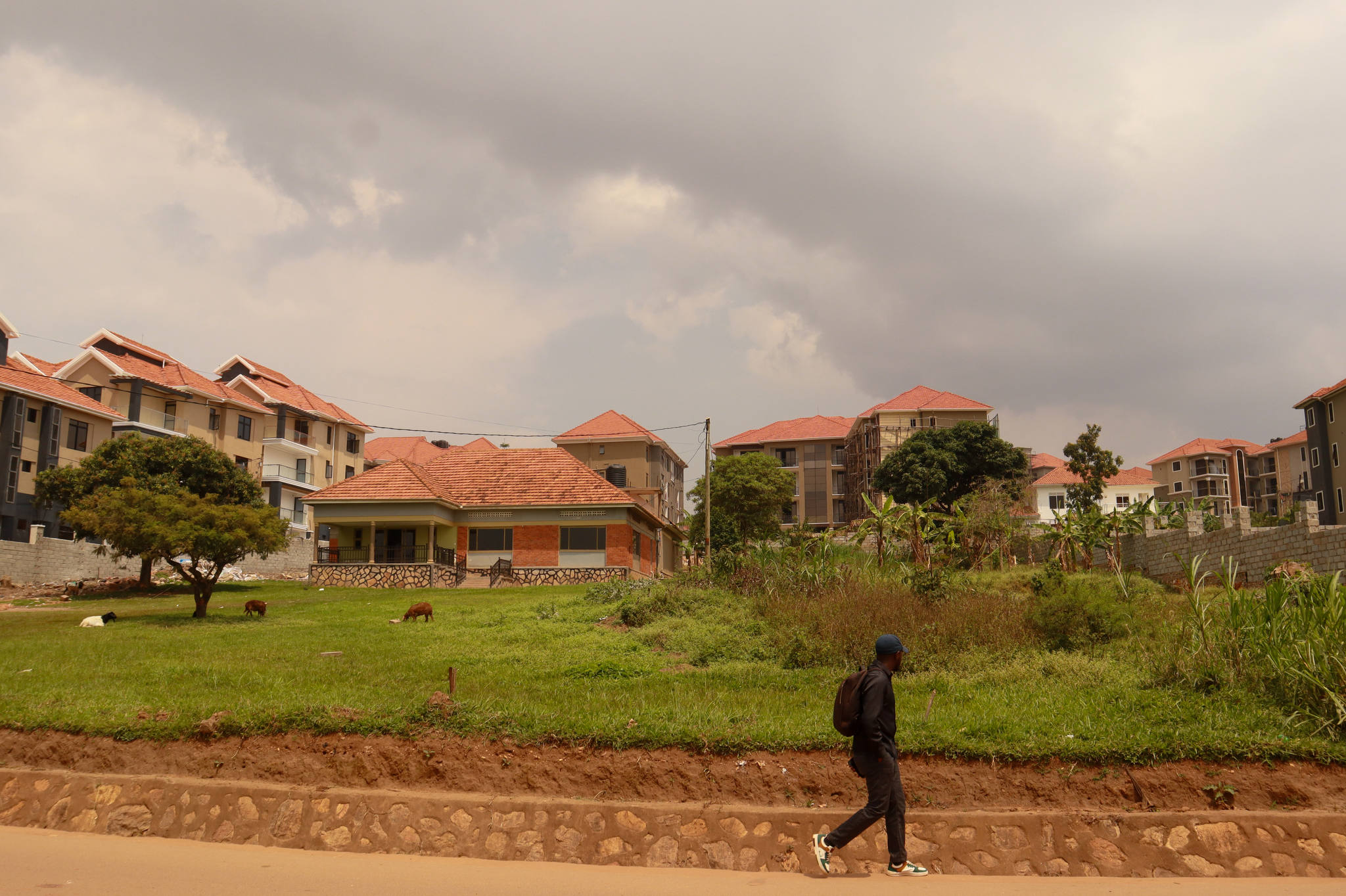
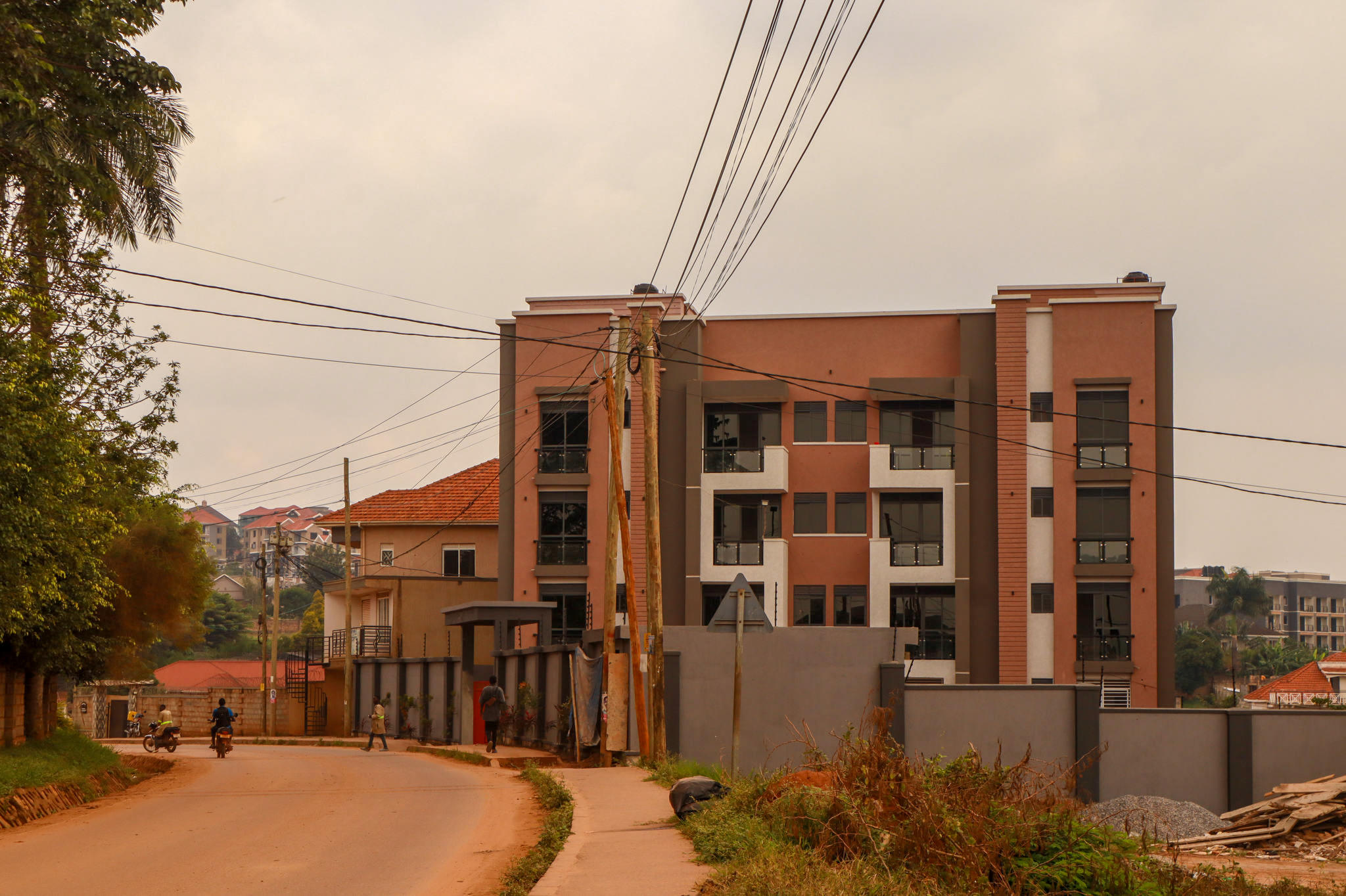
A view of Kyanja, a rapidly growing middle-income suburb on the outskirts of Kampala. As wealthier refugees settle in neighborhoods like this, rising rents are forcing some Ugandans to relocate farther from the capital.
KAMPALA, UGANDA — After escaping Sudan’s ongoing civil war in May, Aisha settled with her mother, her brother and his fiancee in a suburb of Uganda’s capital.
The 25-year-old, who asked to be referred to by only her first name because of concerns about her family’s security, says she feels comfortable in the neighborhood, Kyanja.
Speaking through a neighbor, Muhamed Faheem, interpreting from Arabic, Aisha says she often leaves the fully furnished, three-bedroom apartment her family rents for US$1,000 a month to shop — mainly for food.
To her, the place is worth the money her father, a Sudanese government official and coffee trader, sends from their native country. It lets her family live a life similar to the one they had in Sudan’s Gezira state before conflict erupted in 2023.
But someone who isn’t living like he once did is former Kyanja resident Mukasa Taba Muhamed, who teaches biology at a secondary school. Mukasa, his wife and their three children rented a two-bedroom apartment in Kyanja for five years. They paid 700,000 Ugandan shillings (about US$200) a month until January, when Mukasa says the landlord doubled the rent.
“I wasn’t shocked,” Mukasa says. “I knew it was coming because 70% of the new residents in the same building were South Sudanese paying double the money I was paying.”
Mukasa’s family now lives in Nakwero, 25 kilometers (15 miles) from Kampala and the school where he and his wife teach. He counts himself among the Ugandans who say they’ve been forced to relocate from middle-income communities around Kampala because of escalating rents and the willingness of a population of well-to-do refugees and asylum-seekers to pay prices that are too high for most locals. Mukasa also complains that the government hasn’t done anything to regulate rents.
Uganda, with 1.9 million refugees and asylum-seekers, hosts the biggest refugee population in Africa, according to the United Nations World Food Programme. Kampala is a city of about 1.8 million people. About 154,000 are refugees and asylum-seekers, and many live in crowded conditions, according to Uganda’s Office of the Prime Minister. Global Press Journal couldn’t locate any data on the number of refugees and asylum-seekers in Kampala who are considered affluent.
But while many refugees and asylum-seekers live in poverty, Global Press Journal interviews indicated that some who have fled their countries amid conflicts are people of financial means who work in the hospitality, money-transfer, entertainment and real estate sectors. Others receive monetary support from relatives in Europe, the United States or their native countries.
Experts say the influx of these inhabitants has created more competition in an already-stressed rental housing market, leading to higher prices. It also means some Ugandans must move farther away from workplaces, good schools and health facilities.
“I understand the plight of Ugandans who have been forced to relocate to far areas because they can’t afford to rent houses they would about two years back. But the question is, has the government heard their concerns?” says Stella Neema, a professor of sociology and medical anthropology at Makerere University.
Neema says the housing problem “is going to continue as long as we have an influx of refugees, some of whom are well-to-do and are willing to pay higher prices.” Most of the housing sector is controlled by private owners looking to maximize profits, according to the professor, who says she’d like to see the government establish rent-control regulations and subsidized housing.
Global Press Journal reached out to the Ministry of Lands, Housing and Urban Development requesting an interview about affordable housing, strategies to address the shortage and the impact of well-to-do refugees and asylum-seekers on housing stock, but didn’t get a response.


‘Laws of commerce’
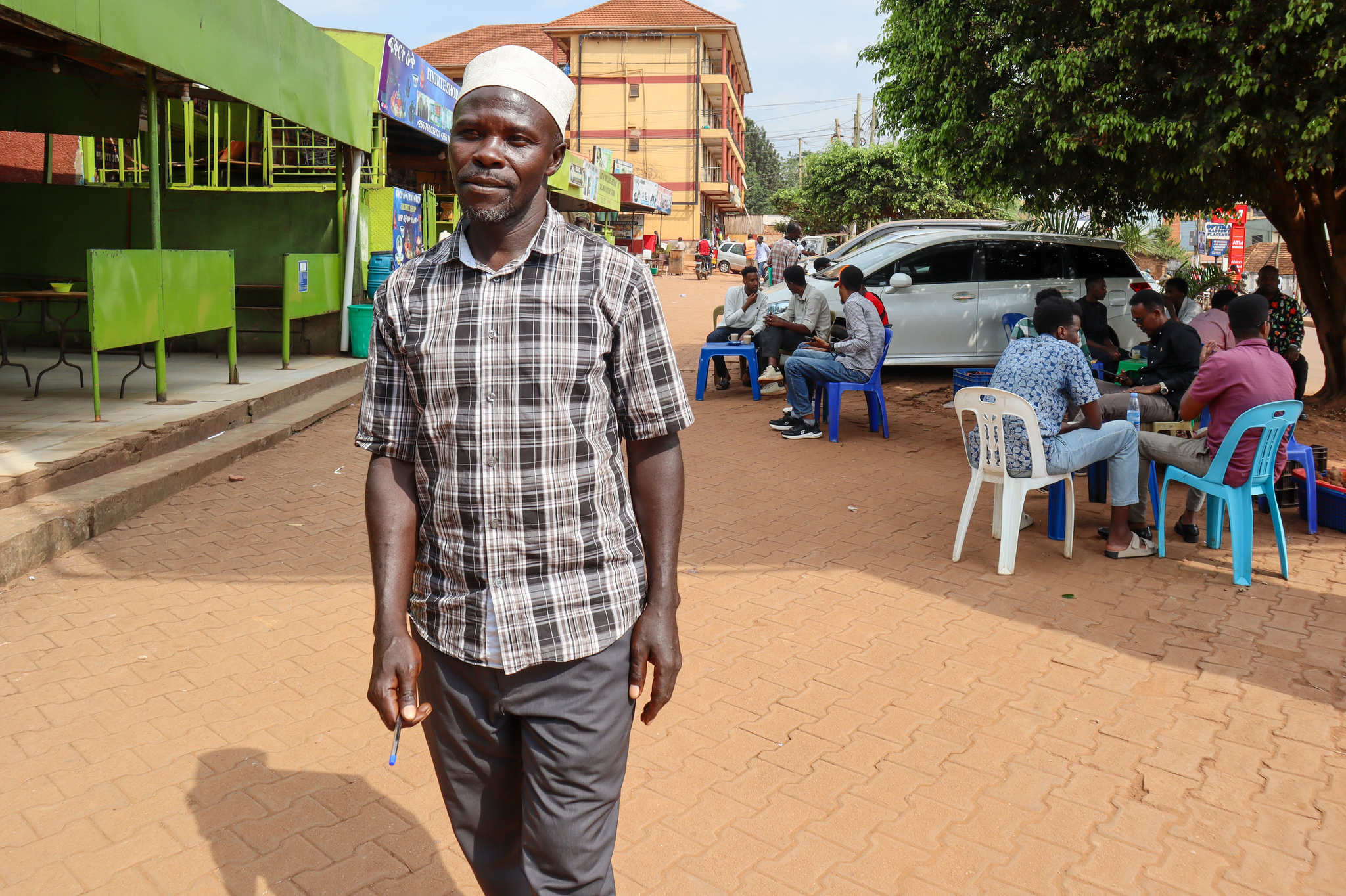
Mukiibi Abdul has been a real estate broker in Kansanga and Kabalagala, two suburbs of Kampala, for 15 years. In the past five years, he’s seen the suburbs transform, with Eritreans, Somalis and Ethiopians moving in and starting businesses.
“Just look at this lane where we are now,” he says, pointing at various high-end restaurants, coffee shops and salons along Ggaba Road in Kabalagala. “How many businesses do you see run by Ugandans?”
Mukiibi says he’s seen Ugandan-owned businesses leave the area because of high rents. He’s seen bars, restaurants and supermarkets fail. His sector has changed, too.
“They speak the language of their people. So when new, rich refugees land in Uganda, they prefer them as real estate brokers to us, taking away our clients,” he says. “And this has reduced my income.”
Bubaale Grace, a neighborhood leader in Kansanga parish, says the community has about 4,000 residents, including about 300 Ugandans. He says the foreign residents include a few Europeans and Asians, but the majority are African refugees, who he believes make notable contributions to the area’s economy.
“Some are great entrepreneurs while others are students at universities,” he says. “Many hostels, tall apartments, shopping malls have emerged because of these people’s money.”
A 2018 survey from the Uganda Bureau of Statistics, the Office of the Prime Minister and the World Bank found “the entrepreneurial potential of refugees is apparent,” with 1 in 5 refugee households owning a non-agricultural enterprise that was generating jobs for Ugandans.
Bubaale says he supports the high rents, referring to the trend as the “laws of commerce.”
“If you were the one owning apartments or any commercial building, whose money would you take?” he says. “A foreigner paying you more or a Ugandan paying you less?”
The community leader says the issue is not about the refugees’ willingness to pay high rents but related to an increasing population and limited housing supply.
A growing problem
Uganda’s housing deficit stands at 2.4 million housing units, with a need almost equally split between rural and urban areas, according to the nonprofit Habitat for Humanity Uganda. Urban areas, including Kampala, have a critical shortage of 54,400 housing units, according to a 2021-2022 report from the Ministry of Lands, Housing and Urban Development, which also acknowledged a shortage of “decent and affordable rental housing.”
Uganda’s population is nearly 46 million people, according to the 2024 national population and housing census from the Uganda Bureau of Statistics, which says 60% of the population lives in informal settlements or inadequate housing conditions.
The census also says 46% of households are overcrowded and the government should implement policies that encourage the construction of adequate living space, including zoning laws that promote the development of larger homes and multi-unit housing.
The housing problem in Kampala is not only related to population growth and an affordable-housing shortage but also influenced by greedy landlords driving prices up, says Dawit Nagash, an Eritrean refugee who owns two high-end coffee shops in Kabalagala.
“When I arrived in Kampala with my daughter, I learned that I was paying US$100 more than my Ugandan neighbors,” he says. “But over time, they left when the landlord increased the fee, and by 2023, the entire block was being rented by Eritreans and Congolese.”
He adds that “as refugees, we feel more comfortable and safe living in areas like Kabalagala, where there are many of us.”
Shifting blame
Warsame Elmi Abdirahman, a Somali student who came to Uganda alone as a refugee in 2021, works as an interpreter and can afford a decent house. He arrived in Uganda after armed people attacked his home in Somalia, killing his father.
In Uganda, he met with a relative who was able to rent a house for him, which he shared with a Ugandan. But over time, the rent went up. He believes it’s because other refugees, mainly Eritreans and Ethiopians, are willing to pay far higher prices and he says they “fueled the exploitation” by the landlords.
Katende Gordon, who owns rental houses in Kansanga, blames real estate brokers for the rent increases. The landlord says he used to charge fair prices to both Ugandans and refugees, but all that changed when the brokers influenced the market rate.
“The brokers would call me and say, ‘I am bringing a Sudanese or Somali rich refugee. Charge him this much and give me my high commission.’ I couldn’t refuse,” he says. “The more they brought to me rich tenants, the more my prices went up.”
Kamoga Grace, a local leader in Kyanja, where Aisha’s family lives, says the increasing number of refugees in her community is a complex blessing.
“They live in isolation. They don’t interact with Ugandans,” she says. “However, they have made this place develop very fast and good services like health centers, shopping malls and schools are now closer.”
For Aisha, her home is not only a place with good security and access to shops and food markets. It’s also where her family celebrates and makes memories.
“It’s at this place that we cooked food for my brother’s wedding in July because we could not find a restaurant that could cook our food,” she says.
It’s a home, she says, that comes at a fair cost.
Nakisanze Segawa is a Reporter-in-Residence based in Kampala, Uganda. She specializes in reporting on LGBTQ+ issues. Born in Luweero and raised in Uganda’s capital, she holds a degree in Mass Communications from Muteesa I Royal University. Known for her powerful photography and deep community access, her 2015 story about school policies that forced Black girls to keep their hair short—while girls of other races could grow theirs long—provoked widespread social media outcry and led to a policy change.
Nakisanze Segawa, GPJ, translated some interviews from Luganda.