Editorial Team
Publication Date
November 10, 2025

Yam Kumari Kandel, GPJ Nepal
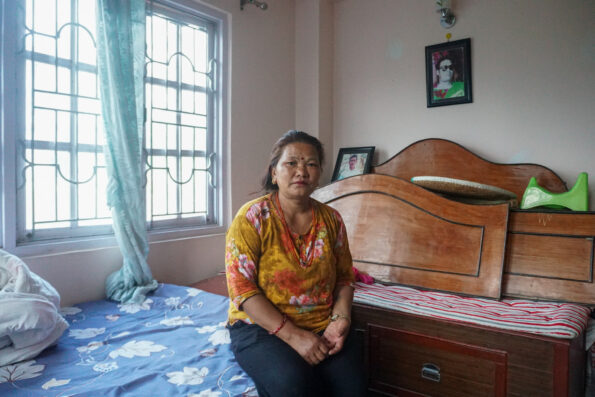
Maya Tamang poses at the Mukti Foundation shelter home in Lalitpur, Nepal. She describes being trafficked to Iraq for domestic work and abused before she was able to return home to Nepal 14 months later.
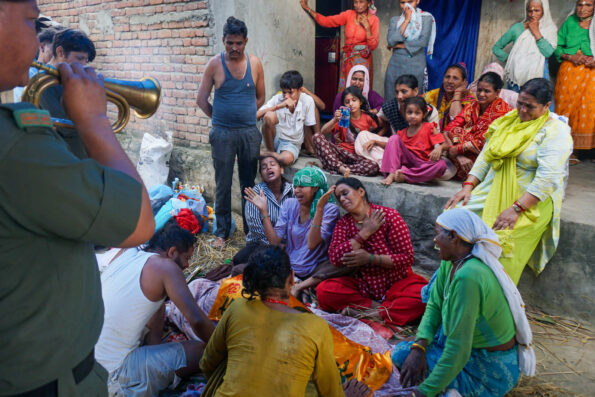
Editor’s note: This presentation contains graphic content.
LALITPUR, NEPAL — Maya Tamang rests on a bed in a shelter for survivors of human trafficking, the rays of the setting sun touching her face as she speaks of a dark time.
She shares how her childhood dream of earning a lot of money turned into a nightmare after she accepted a job broker’s offer of employment in Dubai. In February 2023, she traveled there from Kathmandu’s Tribhuvan International Airport on a visitor’s visa.
“I was excited by the idea of becoming rich,” says Tamang, now 22.
Instead, she says, after just a week in Dubai, the broker had her forcibly taken to Baghdad, Iraq. Now she has scars, inside and out.
Under Tamang’s black T-shirt, there are marks on her stomach, a physical reminder of abuse she says she suffered. She says she refused to have sex with the company owner in Iraq who paid US$6,000 to the broker to “buy” her so she would do cleaning work at his job site and home. Despite repeated beatings and electrical shocks, Tamang says she continued to refuse his sexual advances.
Experiences like Tamang’s are becoming more common, with Nepali women — who face high unemployment rates at home — increasingly being forced into abusive domestic work in Iraq, according to experts who include the spokesperson for the Nepali police force’s Anti-Human Trafficking Bureau and the leader of a migrant advocacy group that helps pull workers out of the country.
Experts say the reasons for the trend are twofold: Women who lack job skills and have little education are migrating illegally to Iraq for work using visitor visas, and unscrupulous job recruitment agencies are abusing Nepal’s “Free Visa, Free Ticket” policy to lure women with the promise of a legitimate job in a Gulf country before trafficking them to Iraq.



Policy abuse and illegal migration
Introduced in 2015, the government’s “Free Visa, Free Ticket” policy was aimed at minimizing migration costs for Nepali citizens who want to seek work abroad in Malaysia and the Persian Gulf countries of Bahrain, Kuwait, Oman, Qatar, Saudi Arabia and United Arab Emirates.
Employers are supposed to bear the brunt of recruitment costs by paying for work visas and airline tickets, leaving workers to pay nominal fees for expenses such as medical tests and social security contributions.
In Gulf countries, Nepali women can work in a variety of positions, including as cooks or waitresses and in factories doing garment work. But the government has banned Nepali citizens from domestic work abroad to try to prevent violence and sexual exploitation. The only exceptions are Jordan and Cyprus, where it’s allowed with permission from the Department of Foreign Employment, according to department spokesperson Chandra Bahadur Shivakoti.
In addition, Nepal in 2004 banned its citizens from going to Iraq for employment after the abduction and executions of 12 Nepali workers there that year. While previously lifted, the ban is again in effect.
The flow of Nepali workers to Iraq was stopped because it is a conflict-ridden area and it is challenging to conduct security analyses there, says Dandu Raj Ghimire, spokesperson for Nepal’s Ministry of Labor, Employment and Social Security.
But experts say some job brokers use the “Free Visa, Free Ticket” policy to promise women legitimate jobs in places in the Gulf, such as Dubai, then withhold passports and money and force them to travel to Iraq, where they can be sold into domestic cleaning positions that can turn abusive.
Manju Gurung, co-founder of Pourakhi Nepal, a nongovernmental organization that works to support the rights of Nepali workers abroad, says while many Nepali women earn good money in Iraq, others are forced to work there and other Gulf countries as modern-day slaves.
Ghimire says it isn’t worth the risk to go to Iraq for work by using a visitor visa, but those who do so voluntarily “cannot be stopped.”
Lifting a restriction on domestic work in the Gulf would decrease the number who are trafficked, says Gurung, who adds that she’s aware of a spike in the number of Nepali women traveling to the Gulf on visitor visas.
That number more than doubled from 2023 to 2024, according to data from Nepal’s Department of Immigration. In 2023, there were 20,184 such departures overall, followed by 50,122 in 2024 and 20,253 through July 6 this year. Departures to UAE led the way, with 16,288 in 2023, followed by 44,494 in 2024 and 8,648 through July 6 this year.
Labor migration expert Rameshwar Nepal says the increasing visitor visa numbers supports the assertion that more Nepali women are working in Iraq. He says recruitment agencies, job agents and organized groups supply people on visitor visas — something he believes is happening due to poor governance. Although Nepal ratified the United Nations Palermo Protocol against human trafficking in 2020, he says it hasn’t been implemented in practice.
Apart from those trafficked, voluntary illegal immigration to Iraq has also increased because of the lure of employment, says Meena Poudel, a labor migration expert who teaches at Kathmandu University.
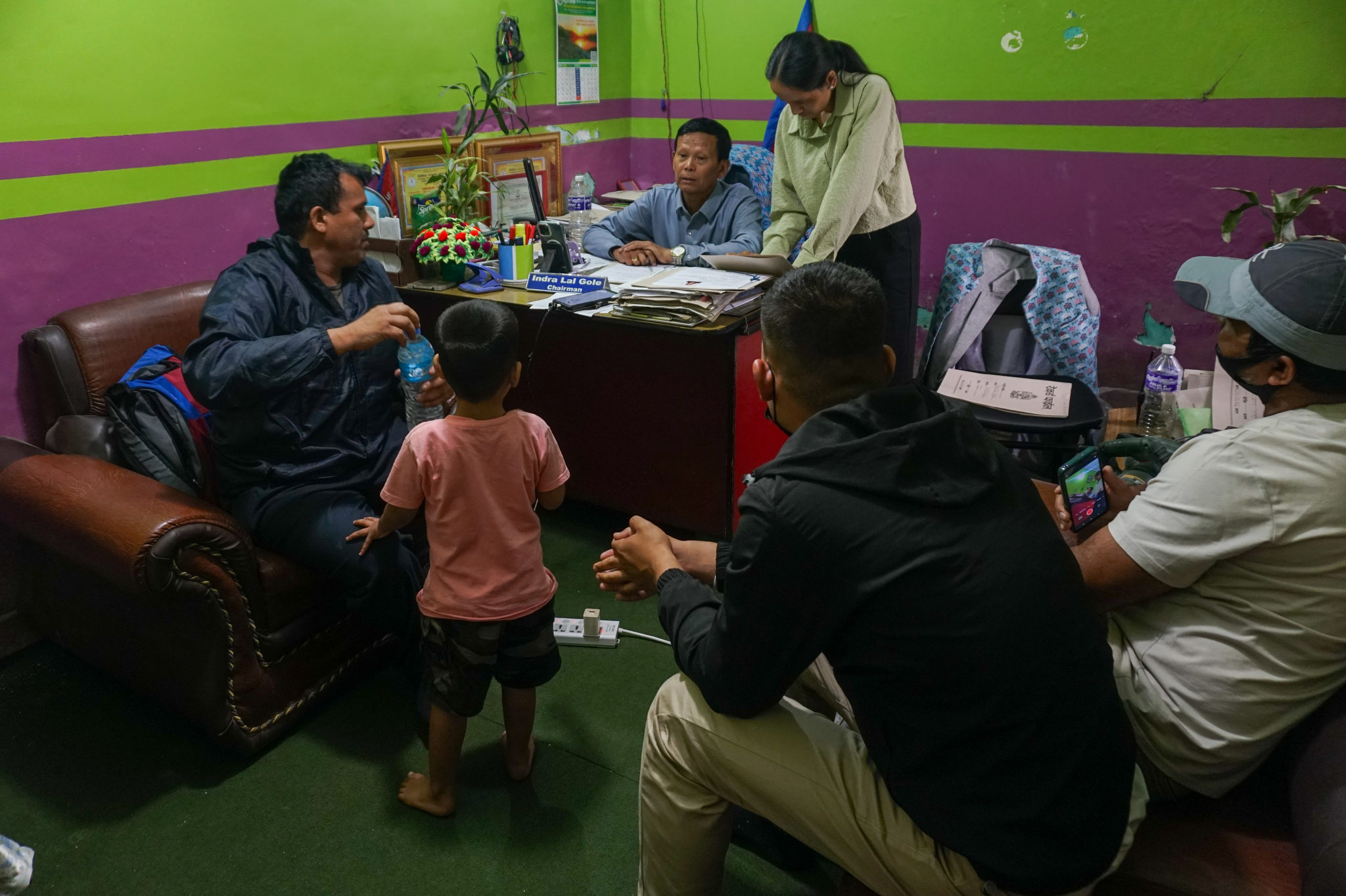
Women who travel illegally become undocumented and can be subjected to financial, physical and mental exploitation, says Indra Lal Gole, president of Foreign Employment Rescue Nepal, a migrant advocacy group.
The trend aligns with an increase in forced labor globally, according to the United Nations Global Report on Trafficking in Persons 2024, which found that between 2019 and 2022, the overall number of people trafficked increased by 47%.
Appeals for rescue
From 2021 until May, relatives of 54 Nepali women migrant workers applied to the Anti-Human Trafficking Bureau for rescue from Iraq, according to bureau spokesperson Narendra Kunwar. Of those, 44 have been brought home and legal proceedings are underway in 10 more cases in district court in Kathmandu.
The cases involve allegations that job brokers, whom the bureau has the power to arrest, arranged for visitor visas for the women to go to Persian Gulf countries and then sold them into domestic work in Iraq. The bureau works on the cases in coordination with Interpol and the Nepali embassy in Iraq.
But Kunwar says although the United Nations Sustainable Development Goals call for ending human trafficking by 2030, Nepal’s government hasn’t paid much attention to the issue.
Apart from government rescues, Gole says from 2017 until mid-2025, his migrant advocacy organization has rescued 200 women from Iraq and more than 500 others have applied for such help. To remove a worker, the group tries to negotiate with an Iraqi company owner or job broker a monetary settlement the worker would pay to be released.
Anyone can apply for rescue with either the specialized law enforcement bureau or Gole’s agency, but officials say their cases don’t overlap. Most workers don’t want to go to the government agency for help if they are working abroad illegally, according to Kunwar.
Migration activist and attorney Som Prasad Luitel said it’s rare for trafficked women migrant workers to seek legal remedies.
Agents sell the women into domestic work in Iraq for between US$3,000 and US$8,000 for a term of two years, according to Gole. He says women have to pay off their labor contract to agents if they want to return to Nepal without completing it.
In Iraq, most Nepali women migrant laborers get low wages, with maximum earnings being around 1 lakh Nepali rupees (about US$706) per month for domestic workers, according to Gole. However, he says job agents have cheated many women and haven’t given them the jobs they promised.
“Nepali girls are being robbed. The government has become a mere spectator,” he says.
Some who seek rescue die before they can be helped, according to Gole, who says the remains of one of the women who requested rescue from his organization were returned to Nepal in May after she died as a result of not getting timely medical care. In all, he says eight women who have requested his organization’s help getting out of Iraq have died there; six didn’t get necessary medical care and two, he says, took their own lives after sexual abuse.
Migrant numbers a mystery
The estimated number of Nepali citizens in Iraq is 15,000, but there is no exact figure for how many are women, according to Krishna Prasad Dhakal, spokesperson of Nepal’s Ministry of Foreign Affairs.
Nima Sherpa, who lives in Iraq and serves as vice president of the local Non-Resident Nepali Association, a global network representing Nepali diaspora communities, estimates there are 8,000 Nepali women working in Iraq. While he cooperates with Gole’s organization to help women who apply for rescue, he says not all Nepali women who have reached Iraq for work purposes face the same problems as Tamang.
Santa Thapa, a Nepali woman who has worked in Iraq for more than a decade, says many women like herself earn decent salaries. As a domestic worker in Sulaymaniyah, Iraq, the 54-year-old says she earns about US$800 a month.
But to return to Nepal, which she has done four times in 11 years, Thapa says she had to pay bribes of US$1,800 to her job agent — money then passed to airport authorities — so she could re-enter the country. She says on two of those journeys, she also had to travel home on an indirect route, going through India and Dubai.
Thapa says many of the job agents who set up Nepali women to work in Iraq are Nepali women themselves and migrant workers who encounter abusive situations in Iraq are mostly in Baghdad.
“If women face hardship while working as domestic workers, it is the agent’s responsibility to change the house,” Thapa says.
But for some women, that doesn’t happen. And when things go wrong, it’s a struggle for them to try to return home.
‘Stuck in a debt trap’
In April 2024, Sanu Budha Magar left Nepal’s Rukum district bound for Iraq after a job broker arranged domestic work for her.
Magar, 32, says she traveled to Dubai on a visitor visa and then illegally migrated to Iraq, paying a fee to a broker of 50,000 rupees (about US$353) to get there before she began working in the home of a local resident.
However, after being forced to work overtime, not being able to eat well and worrying about her personal safety, Magar decided she wanted to return to Nepal. That hasn’t happened yet because she has to pay the job agent US$6,000 after she only worked three months of a two-year contract.
Magar says she was allowed to take another job in a hotel after her husband got a loan in Nepal so she could pay US$4,000 of the debt, while promising to pay the rest. She now earns about US$700 a month. Magar says she wants to keep working in Iraq until she has enough to pay off the loan too, since she has no idea how she would pay back all the money if she returns to Nepal.
“We are stuck in a debt trap. We don’t know how we will get out of here,” Magar says.
Women aren’t allowed to leave Iraq if they can’t repay the job agent’s investment, according to Sherpa, of the Non-Resident Nepali Association.
The law in Iraq says a worker who is under an employment contract can’t leave the country unless she or he obtains an exit visa, which the Ministry of Interior doesn’t issue unless the person’s employer provides a document that says they have fulfilled their obligations.
Those in debt bondage are at a special disadvantage, as employers who say they are owed money for things like travel or living costs can trap a person until the supposed debt is repaid, according to the International Organization for Migration’s November 2024 report on human trafficking in Iraq.
‘A deep emotional trauma’
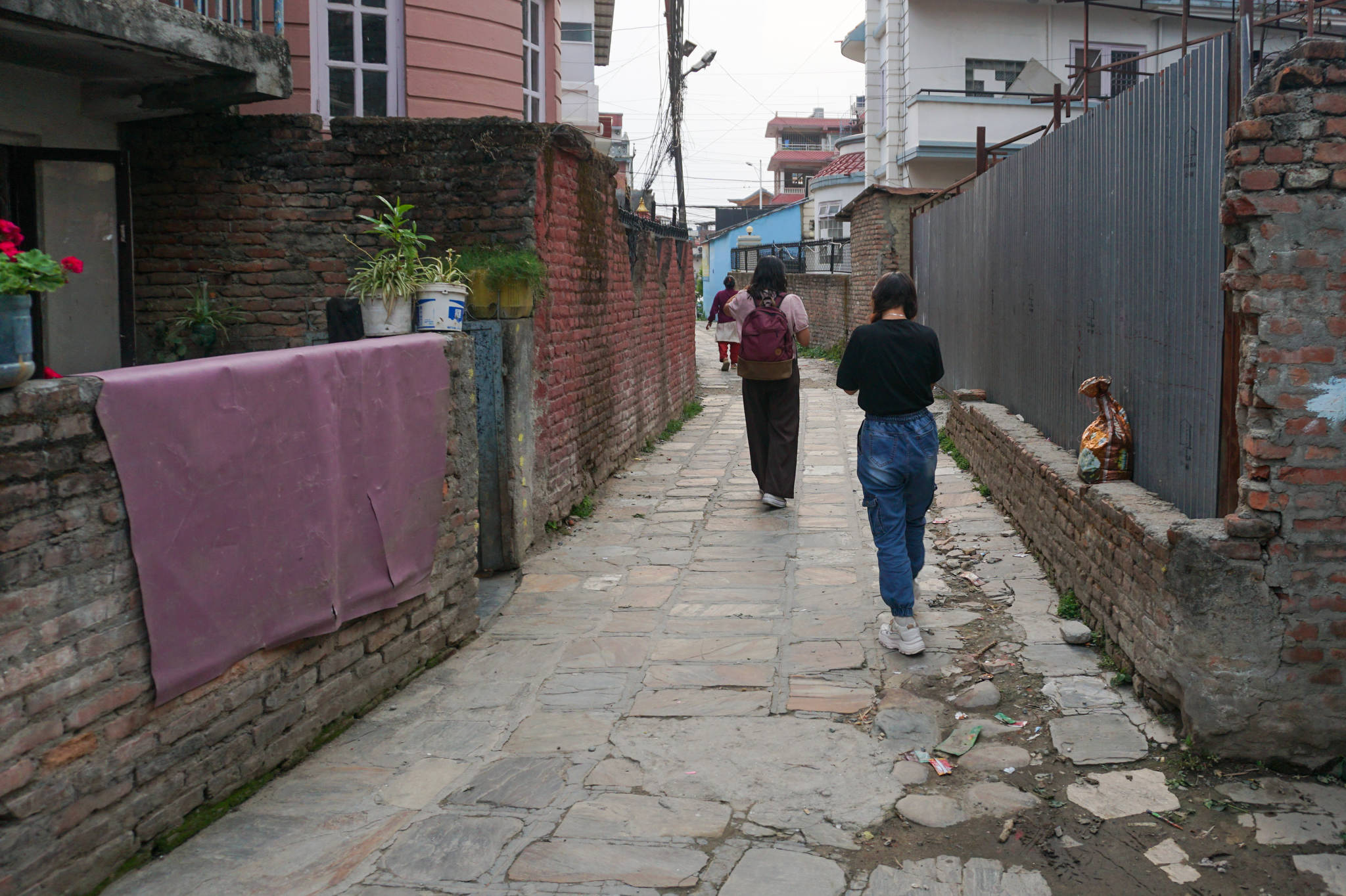
Tamang and Magar each describe 20-hour days as domestic migrant workers, where they were tasked with cleaning their employers’ businesses and homes. They say they didn’t get paid on time and also had to look after children and wash clothes.
Tamang was able to leave Iraq after about 14 months. But she says that relief came after living in constant fear and surviving repeated abuse. Tamang says one day her employer kicked her from a high ladder and beat her, leaving deep injuries to her nose and head. The employer also would repeatedly strike her on her cheek and ear in front of his wife and tell her she wasn’t doing her job well, she says.
“I was always afraid. I wanted to come to Nepal,” she says.
But Tamang says she couldn’t communicate with her family since the job broker had taken away her cellphone. One day, her employer made her faint by smelling something on a white cloth, according to Tamang, who says she started to feel pain in her stomach and a stabbing sensation after she regained consciousness.
Tamang says that after she began fainting repeatedly, the job broker let her pay back 140,000 rupees (about US$989) to get out of her contract so she could return to Nepal.
Back home with her family, Tamang’s fainting spells continued. She moved to a shelter home run by Mukti Foundation in the city of Lalitpur, about 7 kilometers (a little over 4 1/2 miles) from Kathmandu, a group that helps people pulled from human trafficking with counseling, legal aid, remedial education, skills training and reintegration support. Shelter personnel took her to Nepal Mediciti hospital, where she says she had surgery that removed seven needles from inside her body — a remnant of the torture.
Tamang suffers from bipolar disorder and has attempted suicide several times, according to shelter psychologist Bandhana Sharma. She says the young woman “suffered a deep emotional trauma” in Iraq.
“The wound,” Sharma says, “will take time to heal.”
Yam Kumari Kandel is a Reporter-in-Residence based in Kathmandu, Nepal. She holds a bachelor’s degree in law from Tribhuvan University and previously worked for the National News Agency of Nepal. Yam focuses on migration and labor rights, especially the experiences of migrant workers and their families. She is best known for her coverage of Nepali workers’ rights in Qatar and Ukraine, as well as investigations into the challenges faced by migrants abroad.