Editorial Team
Publication Date
August 10, 2025
Fadiyah Alaidrus, GPJ Indonesia
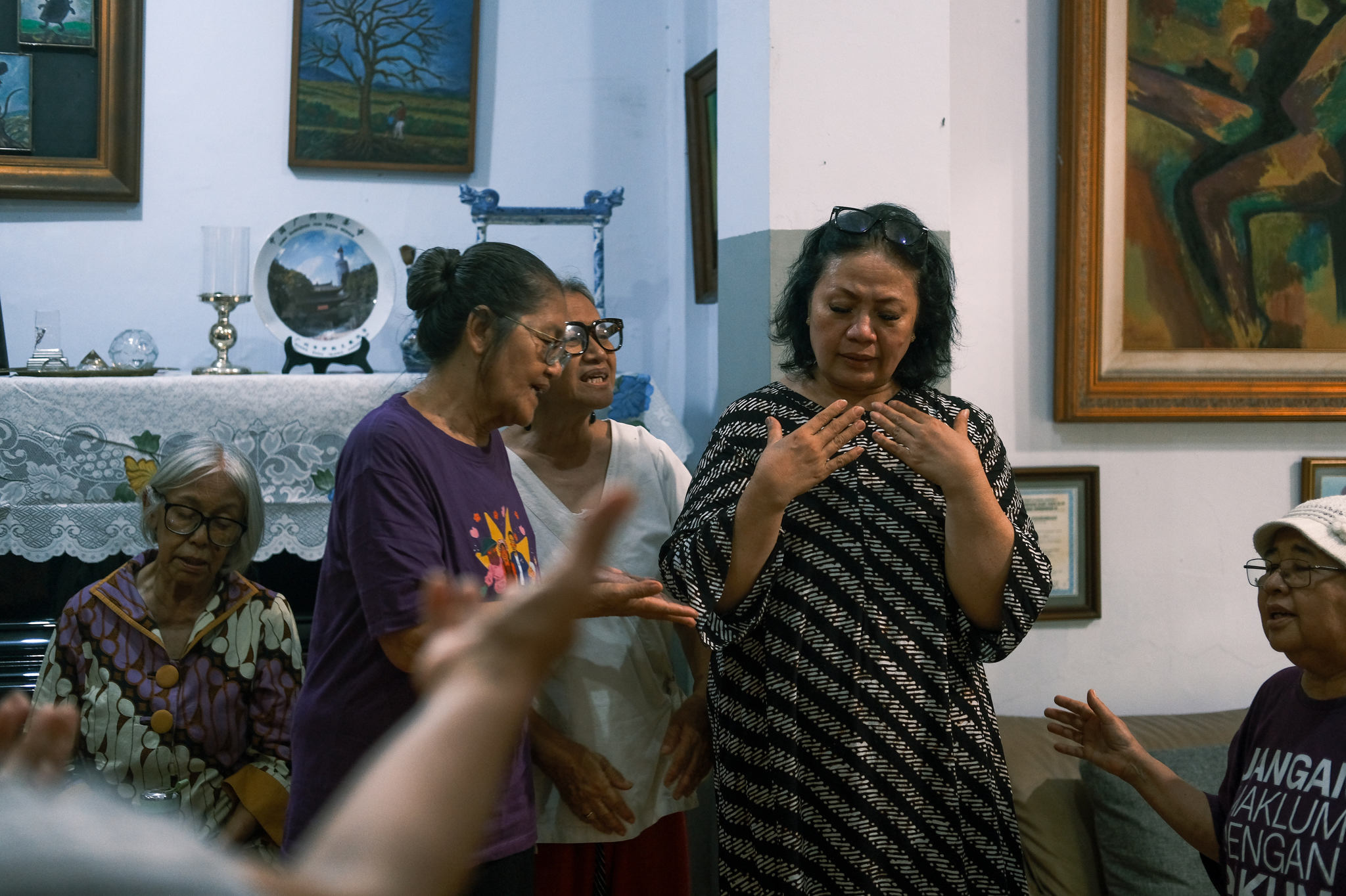
Members of Dialita, a choir of women who lived through the 1965 purge and their relatives, rehearse an old prison song that moves several singers to tears. The group meets twice monthly to keep memories of Indonesia’s anti-communist crackdown alive despite official efforts to rewrite history.
JAKARTA, INDONESIA — The 13 female members of Dialita Choir gather at one of their homes in East Jakarta. They laugh during breaks, but when they sing, tears stream down their faces.
“I imagine your face, Mom,” the lyrics go. “I hope you are always healthy.”
Utati Koesalah, one of the singers, wrote the song during her 11-year confinement in Bukit Duri prison, after she was arrested and imprisoned without trial in 1967 during Indonesia’s communist purge. During that confinement, she worried about her mother, who lived hundreds of kilometers away.


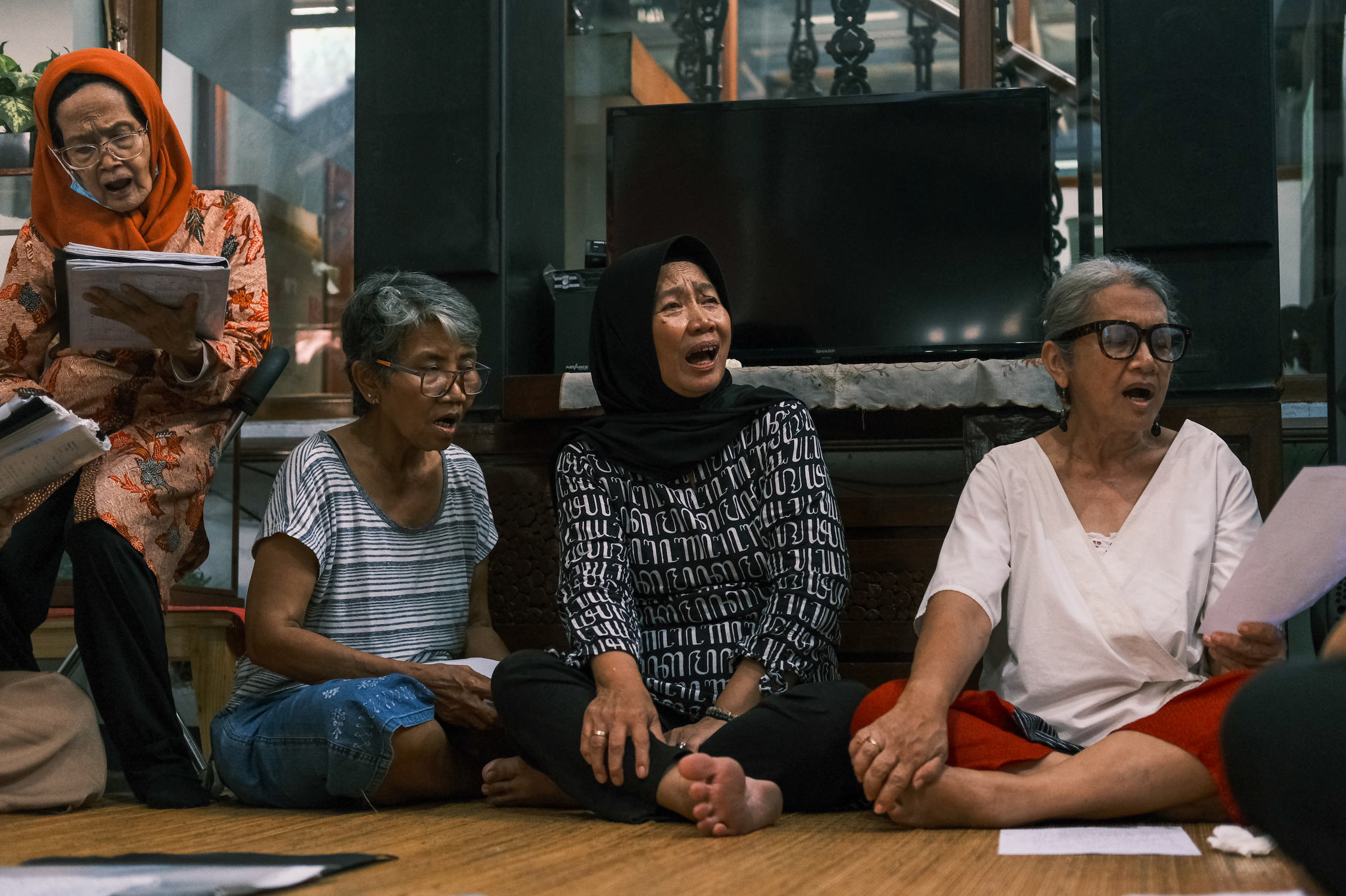
“Would she understand what was happening to me?” Utati remembers thinking. (Utati, like many Indonesians, prefers to use her first name.)
According to an International People’s Tribunal report, the communist purge, which General Soeharto began in 1965 before he became president, resulted in as many as half a million deaths, at least 600,000 imprisonments and more than 32,000 forced disappearances. Dialita Choir consists entirely of former political prisoners and their relatives. Through their songs, they preserve memories that Indonesia’s government now seeks to erase.
The Indonesian Ministry of Culture is producing a 10-volume book series that aims to record Indonesian history. But the account takes a “positive tone” and denies documented atrocities, including the 1998 mass rape of Chinese-Indonesian women — contradicting the National Commission on Violence Against Women’s 1999 report. It also omits other past human rights violations, including the 1965 massacres and imprisonments. The Ministry of Social Affairs also plans to declare Soeharto — President Prabowo Subianto’s father-in-law — a national hero.
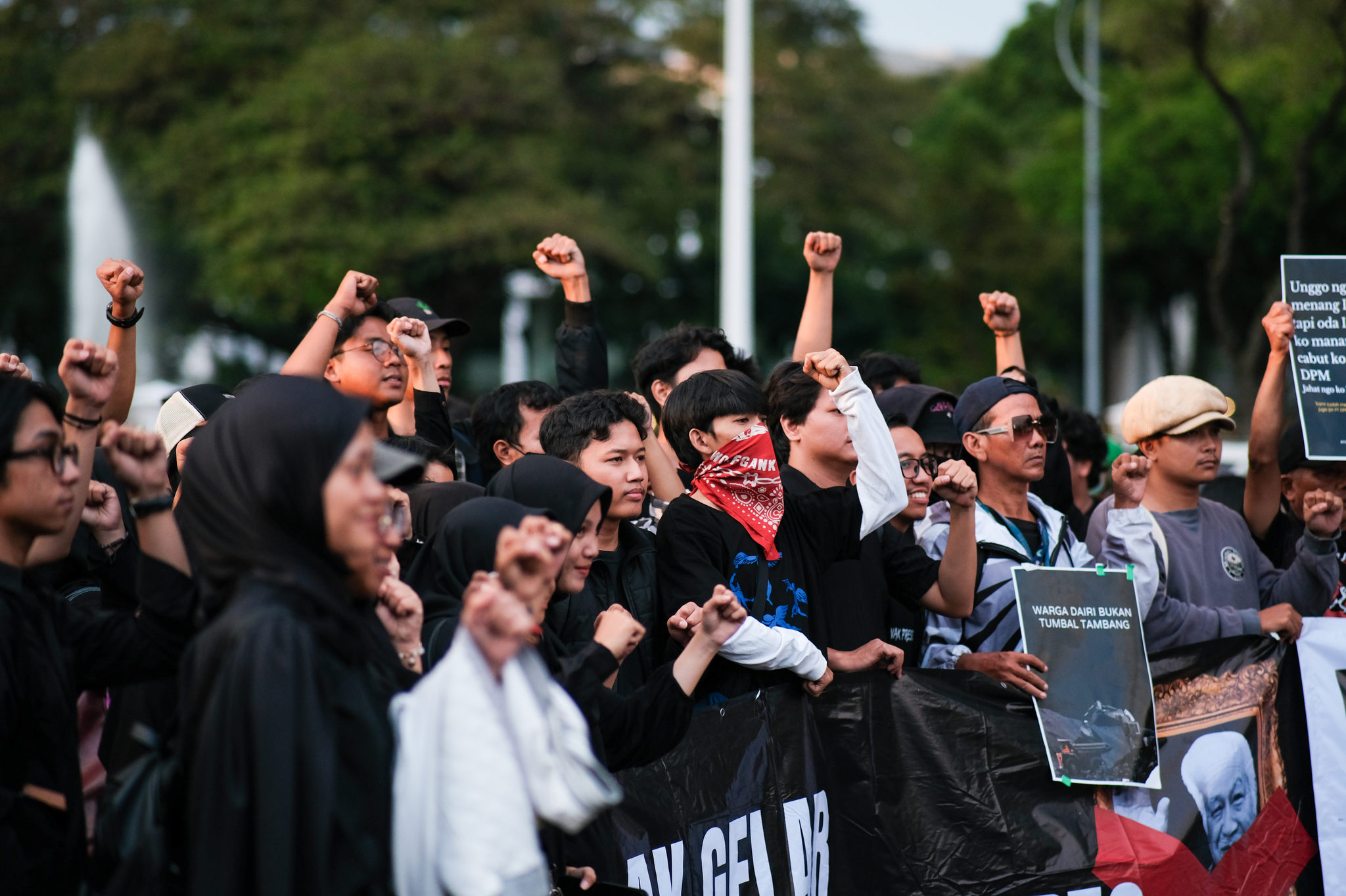
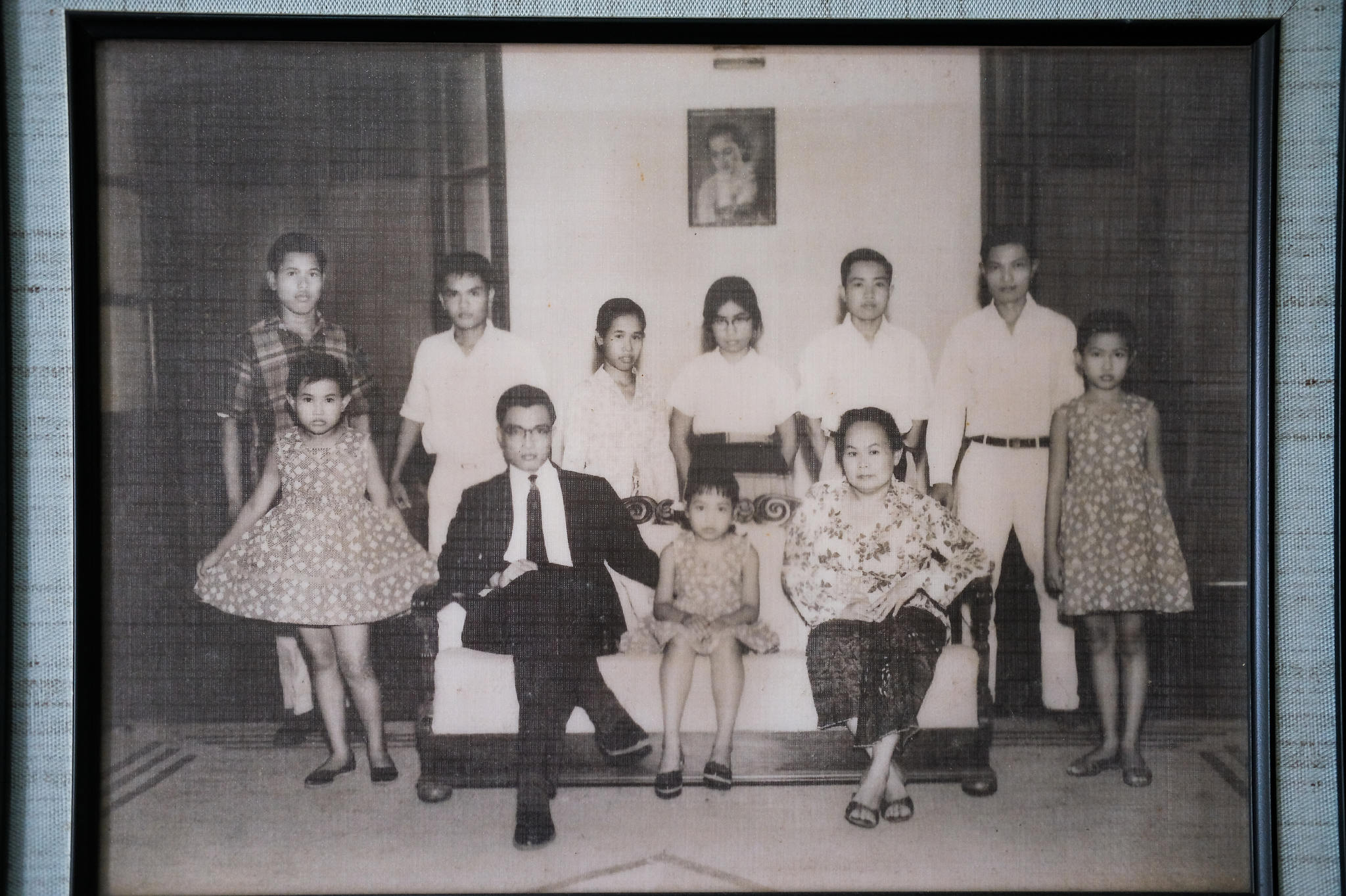
These moves have sparked widespread protests, but for those who experienced the purge firsthand, the pain remains deeply personal. Nani Nurani, 84, was imprisoned without trial for six years starting in 1969, accused of strip dancing at Lubang Buaya, Jakarta, and affiliating with communists. Before her arrest, Nani worked as a singer for the presidential palace, performing at political events, including a Communist Party anniversary, although she was never a member of the party or any leftist movements.
“I don’t want money or anything else but vindication,” she says. Despite decades of legal battles, she has not been exonerated.

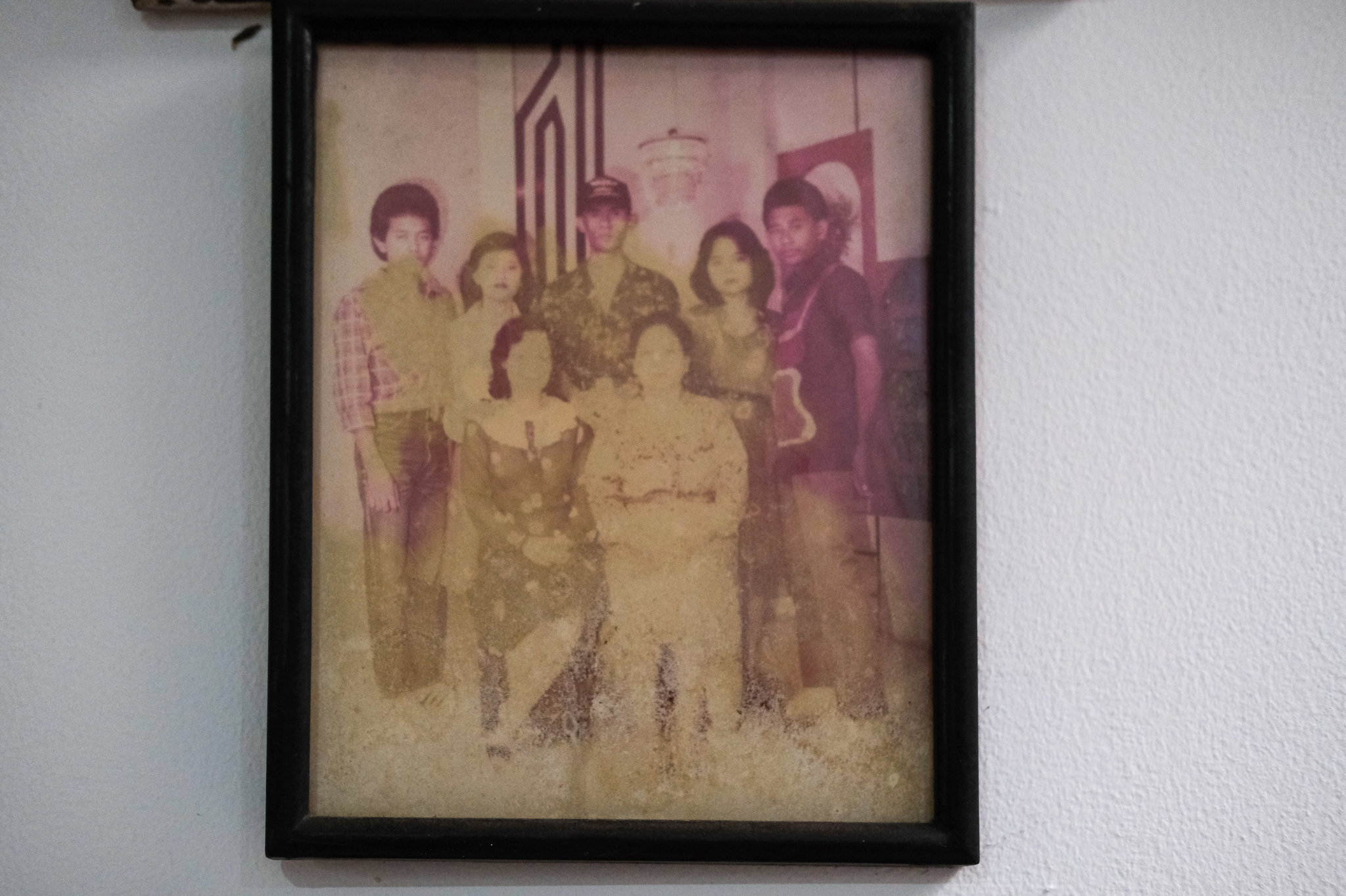
Uchikowati Fauzia, 73, another Dialita member, was 13 when both of her parents were arrested without trial in 1965. Her mother was released after eight years, but her father waited until 1980 to see freedom. He died in 1985. The law, Fauzia says, doesn’t provide a way for justice to be served for those who were wrongly imprisoned.
“Dialita is one of our ways to voice it,” she says.
In another part of Jakarta, across from the Presidential Palace, protesters carry banners and photos of people who lived through Soeharto-era atrocities. Maria Catarina Sumarsih, 73, attends almost weekly, vowing to continue until the government addresses past human rights violations, including her son’s death in the 1998 reform protests.
“The revision of history,” Sumarsih says, “shows that the current government will continue the impunity … denying the historical facts that occurred in our country.”

Correction: An earlier version of this article misidentified the Ministry of Social Affairs. Global Press Journal regrets the error.
Fadiyah Alaidrus is a Shifting Democracies Fellow based in Jakarta, Indonesia. They are recognized for their incisive reporting on gender, human rights and environmental issues in Indonesia. Their work has been featured in prominent national and international outlets, including Al Jazeera English, The Wall Street Journal, New Naratif and Mongabay.
Fadiyah is best known for the 2023 series Memori Tubuh Kami (“Our Bodies’ Memories”), a compelling collection of 11 investigative reports that delve into gender and sexual discrimination against children in Indonesia.