Philippines
A decision by the country’s highest court opens up nearshore waters to export-minded commercial trawlers, waters that had been reserved for the small-scale fishers who feed the nation.
By Geela Garcia, Reporting Fellow
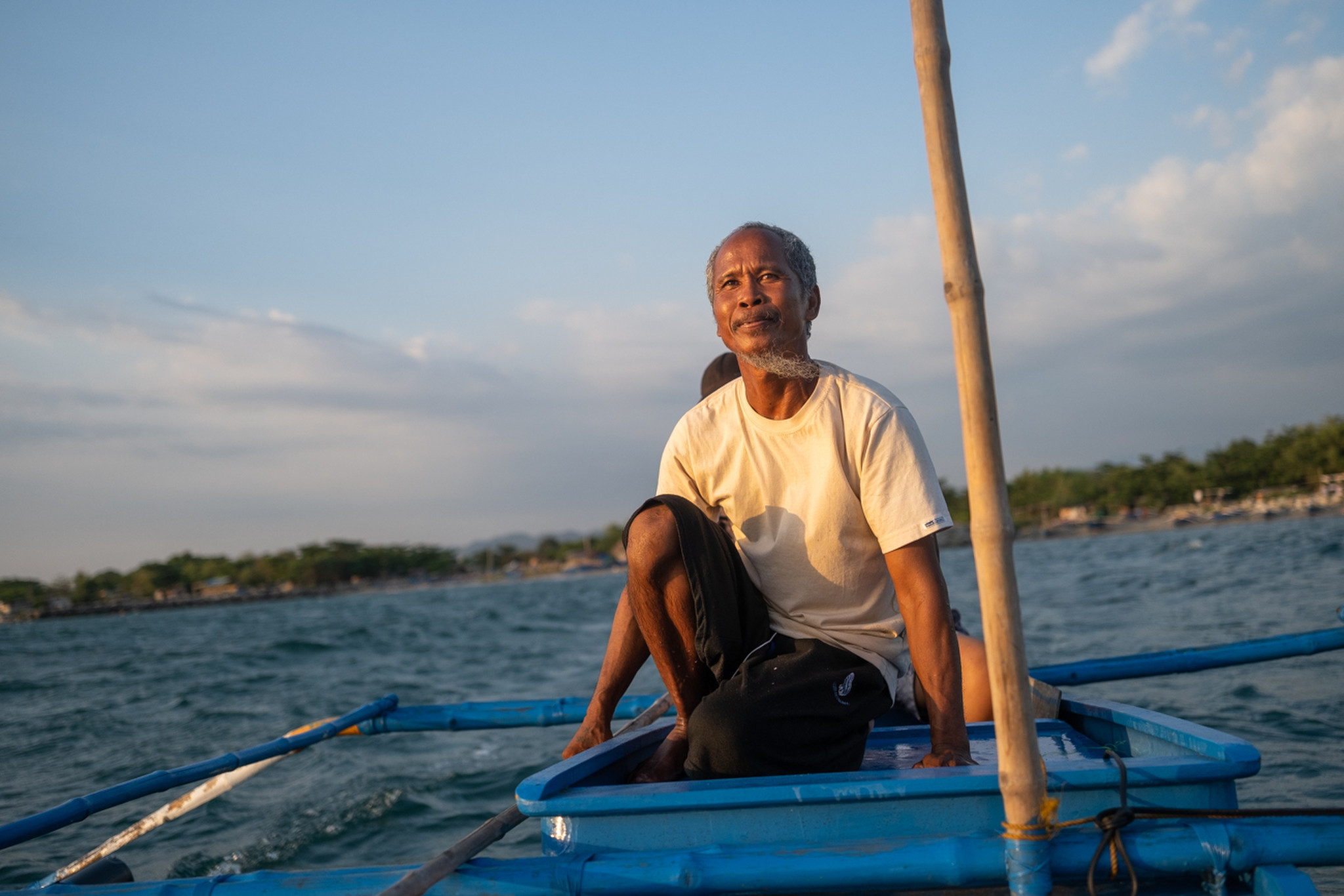
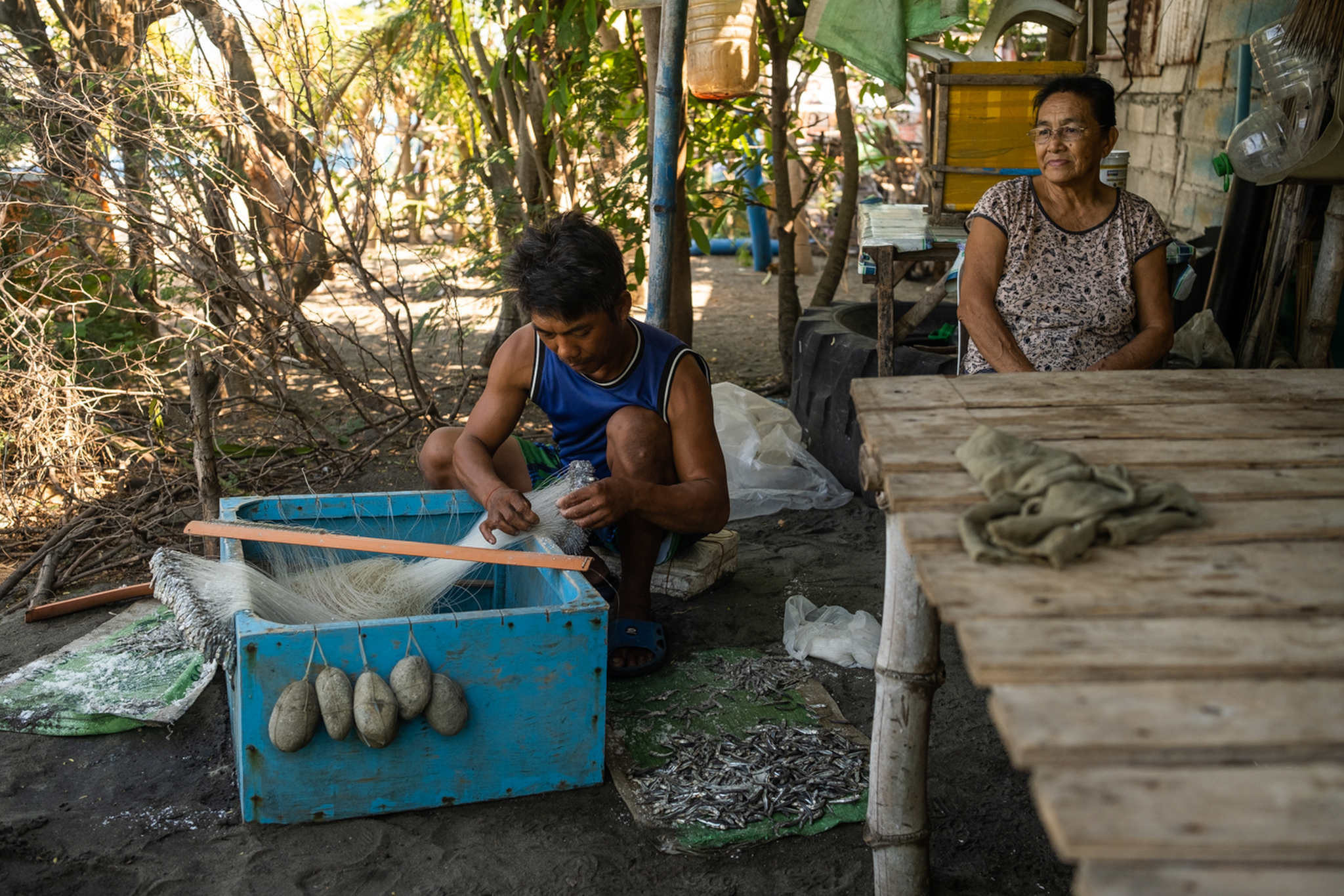
LA UNION, PHILIPPINES — Lourdes Doctolero has been at her stool since 7 in the morning, unwinding nylon threads from wooden boxes. She is making “kitang,” a fishing bait used by independent fishers.
Unknotting the fine threads takes half her day. Once finished, her son-in-law, Robert Corpuz, attaches anchovies to each hook. Late at night, he sets out to sea, returning just after sunrise with little to show for the hours spent fishing. The catch barely covers the family’s expenses.
“We have always been in debt to afford fishing capital,” Doctolero says.
Beyond barely making ends meet, Doctolero and her community face a greater threat: the loss of their fishing area to commercial fishing companies. In August 2024, the Supreme Court of the Philippines affirmed the decision of a regional court to allow corporate fishing companies to fish in municipal waters regardless of their depth. Organizations representing the small-scale fishing community have filed appeals to intervene, which raises questions over whether the Supreme Court decision is final. Even so, the decision has already been applied in some jurisdictions.
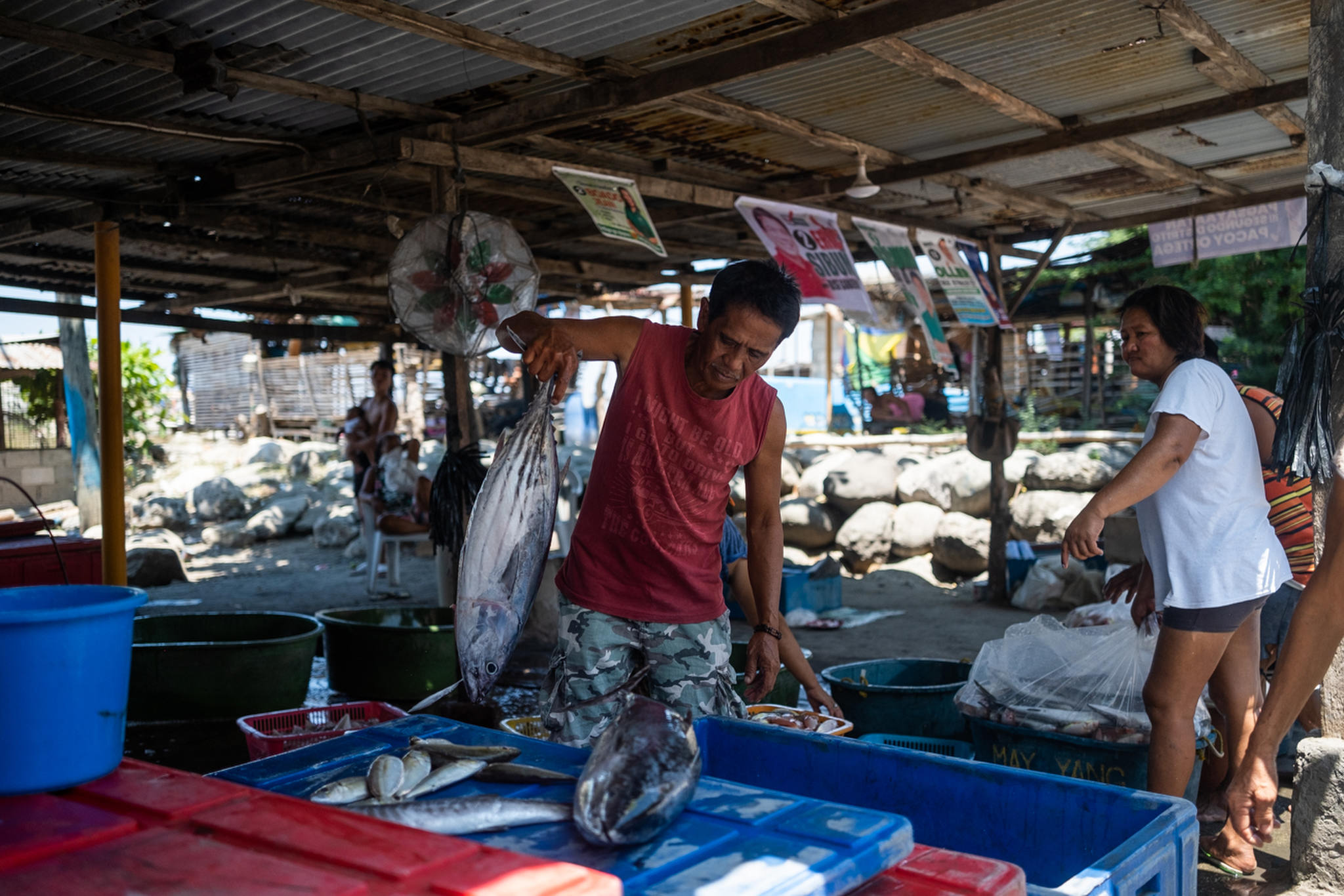
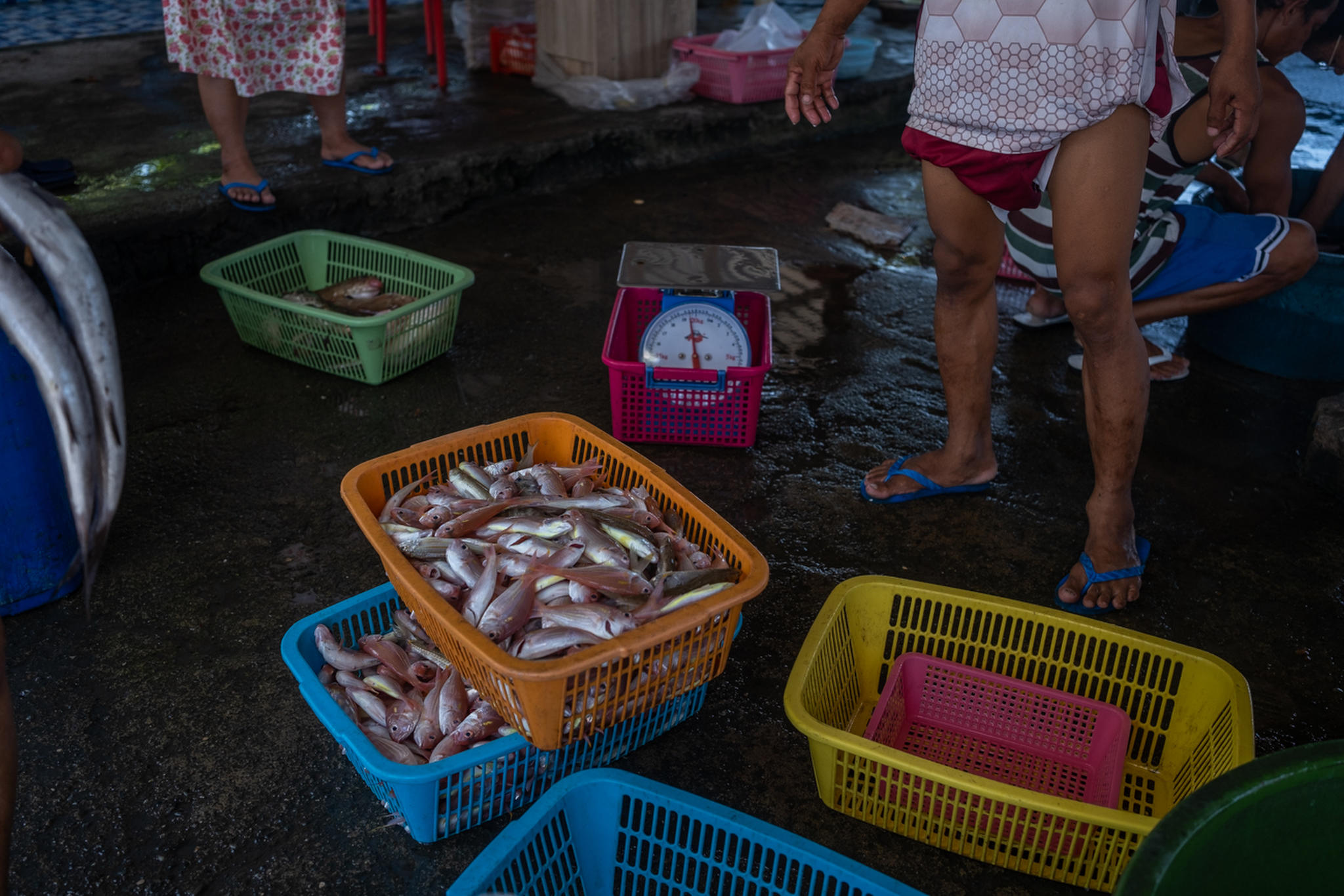
The ruling isn’t just a threat to Doctolero’s community. It impacts more than 2.3 million small-scale fishermen across the country, who until now have collectively provided the bulk of the nation’s harvested fish — nearly 40% of the total value of the catch. Commercial fishing companies largely export their catch, which amounts to 23% of total production by value, according to the 2023 Philippine fisheries profile by the Bureau of Fisheries and Aquatic Resources.
That means people in the Philippines, while having among the longest coastlines in the world, will have an ever-dwindling amount of fish to eat themselves.

Under the Philippine fisheries code, small-scale fishers have had preferential use of water up to 15 kilometers (9.3 miles) from shore, as long as the water is only up to seven fathoms (42 feet) deep.
Mercidar Fishing Corporation challenged this provision as unconstitutional, questioning why only small-scale fishers can fish within municipal waters. Mercidar is hardly the largest fishing corporation in the country, but its leadership is notable. Monica Cordoba, the company’s chief, has close ties to the government; she’s the wife of National Telecommunications Commission Chair Gamaliel Cordoba.
In last year’s ruling, the Supreme Court affirmed a decision by the Malabon Regional Trial Court, which favored the commercial fishing operator. The decision comes amid ongoing attempts by commercial fishers to evade regulations set by the Bureau of Fisheries and Aquatic Resources and the Department of Agriculture’s implementation of a vessel monitoring system to target illegal, unreported and unregulated fishing.
Mercidar did not respond to requests for an interview. The Inter-Island Deep Sea Fishing Association, an organization of commercial fishing operators, declined to comment.
Advocacy organization Oceana Philippines, together with the Philippine Movement for Climate Justice, the municipality of Santa Fe, and other groups, filed a petition to intervene in the case in January. This was followed by fisherfolk in provinces such as Batangas and Cavite a few days later. Should their petitions be granted, small fisherfolk will have the chance to assert their right in court.
But the group hasn’t heard from the Supreme Court regarding those petitions, says Daniel Ocampo, a campaigner with Oceana Philippines.
The decision would be final once the Supreme Court affirms its decision and dismisses the petitions and the motion for reconsideration submitted by the Bureau of Fisheries, which is part of the Department of Agriculture.
Despite challenges to it, the decision is already being implemented in some parts of the country.
In Guimaras, a community in the Panay Gulf, a judge cited it when dismissing a case filed against commercial fishing companies, says Paul de la Cruz, former mayor of the Nueva Valencia municipality in that region. Fishers and their advocates filed a motion for reconsideration and the judge recalled his decision, de la Cruz says.
But the same is happening elsewhere.
In La Union on Luzon Island, George Cacayuran, fisherman and chairperson of Timek ken Namnama Dagiti Babassit a Mangngalap ti La Union, a small-scale fishing organization in Agoo known as Timek, gathered over 370 signatures of fisherfolk to invite their mayor for a dialogue to gather support from the local government unit.
Cacayuran says there was no consultation done on whether the decision was appropriate for their conditions.
“You can’t call it sovereignty if you don’t have people, so when the people are hurt, they will make noise. The government should make laws to better the people, and this is why we are fighting to reverse the decision,” Cacayuran says.
Instead of laws that favor large corporations and the private interests of top officials, fisherfolk urgently need support for their livelihood, Cacayuran says. That includes giving boats, nets and fuel subsidies to small-scale fisherfolk so they don’t need to borrow money from lenders for such capital needs.
Timek filed for a dialogue at the municipal office months ago; so far, the organization hasn’t received a response.
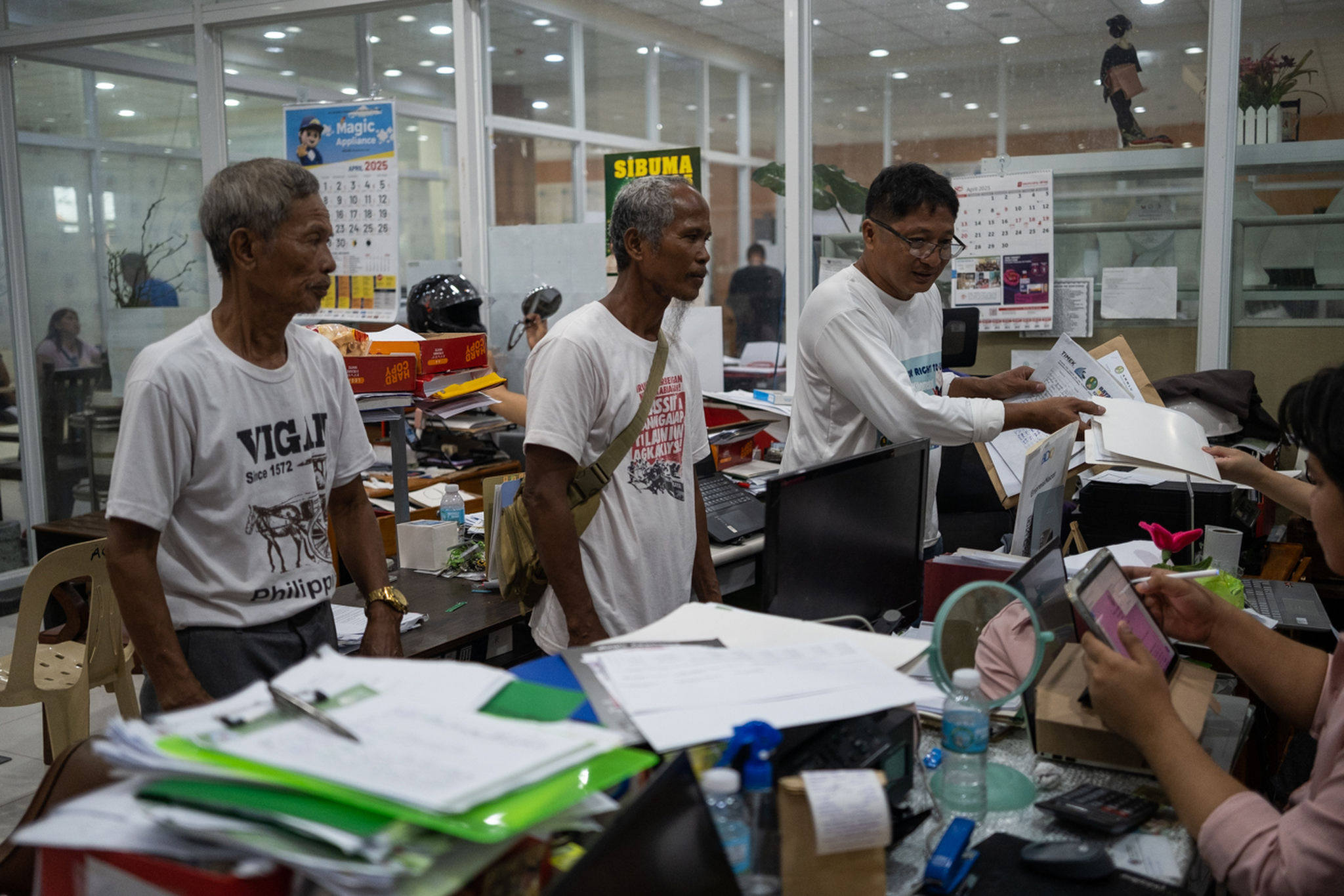

Cacayuran says the Supreme Court ruling will worsen an already fragile situation.
Even before the Supreme Court ruling, commercial fishing vessels were seen in nearshore waters because of a loophole in the code that allows them to fish in areas where the water is at least seven fathoms deep. The large fishing vessels routinely pushed beyond that limit, he says.
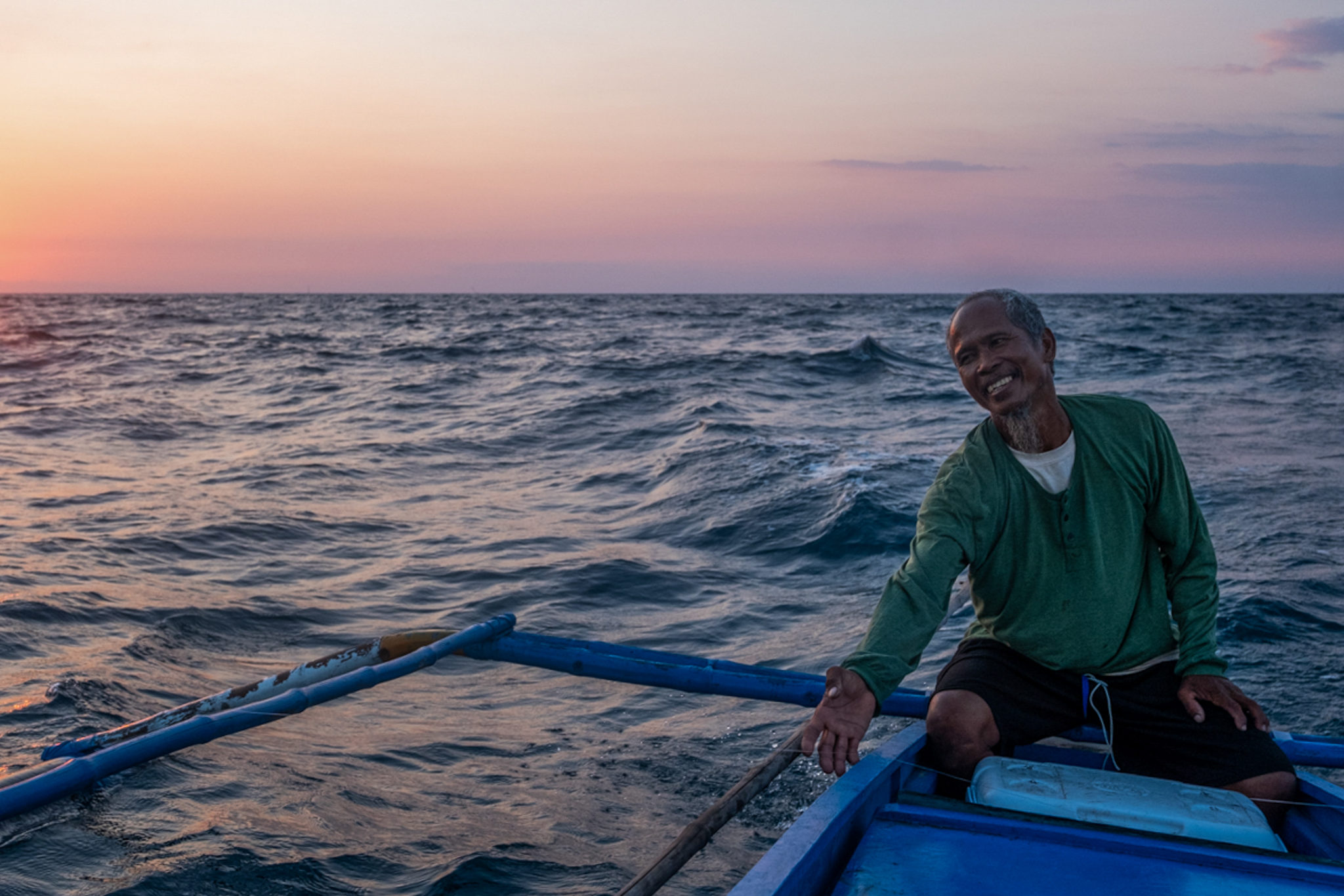
“They have always been around our waters,” Cacayuran says. “Some would intimidate us with guns, and the trawls inevitably destroy our small baits whenever they pass by us.”
Despite their contributions to local food supplies, small-scale fishers already form one of the country’s poorest sectors.
Doctolero says her family once caught from 10 kilos to 12 kilos (22 pounds to 26 pounds) of fish on good days. Now, they only catch 3 kilos to 5 kilos (6.6 pounds to 11 pounds). She says she loses her handmade baits whenever the commercial fishing vessels pass by.
Cacayuran says he uses small hooks with plastic baits, which also are destroyed by the large boats.
A single drop of a commercial fishing boat’s net is equivalent to the day’s catch for more than 300 small fishermen, Cacayuran says.
“That trawl can also drop three times in a single day,” he says. “How could we compete with that?”
Editorial Team
Reporter:
Editor:
Fact-Checker:
Copy Editor:
Photo Editor:
Geela Garcia is a Shifting Democracies Fellow at Global Press Journal, based in Manila, Philippines. Previously, she has covered women, food sovereignty, and environmental issues for prominent news outlets, including the Thomson Reuters Foundation, South China Morning Post, CNN Philippines Life and Philstar.
In 2023, Garcia’s cross-border reporting team received the Irish Red Cross Humanitarian Award for Journalism Excellence for their investigation into modern slavery in Irish fishing vessels. Geela’s dedication to highlighting underrepresented communities and issues has also been recognized by the Prince Claus Fund, which selected her as one of three Filipino artists for its Seed Awards in 2023.
