Indonesia
Kongsi 8 gives women and gender minority artists a space to come together and create in the face of worsening repression.
By Fadiyah Alaidrus, Reporting Fellow
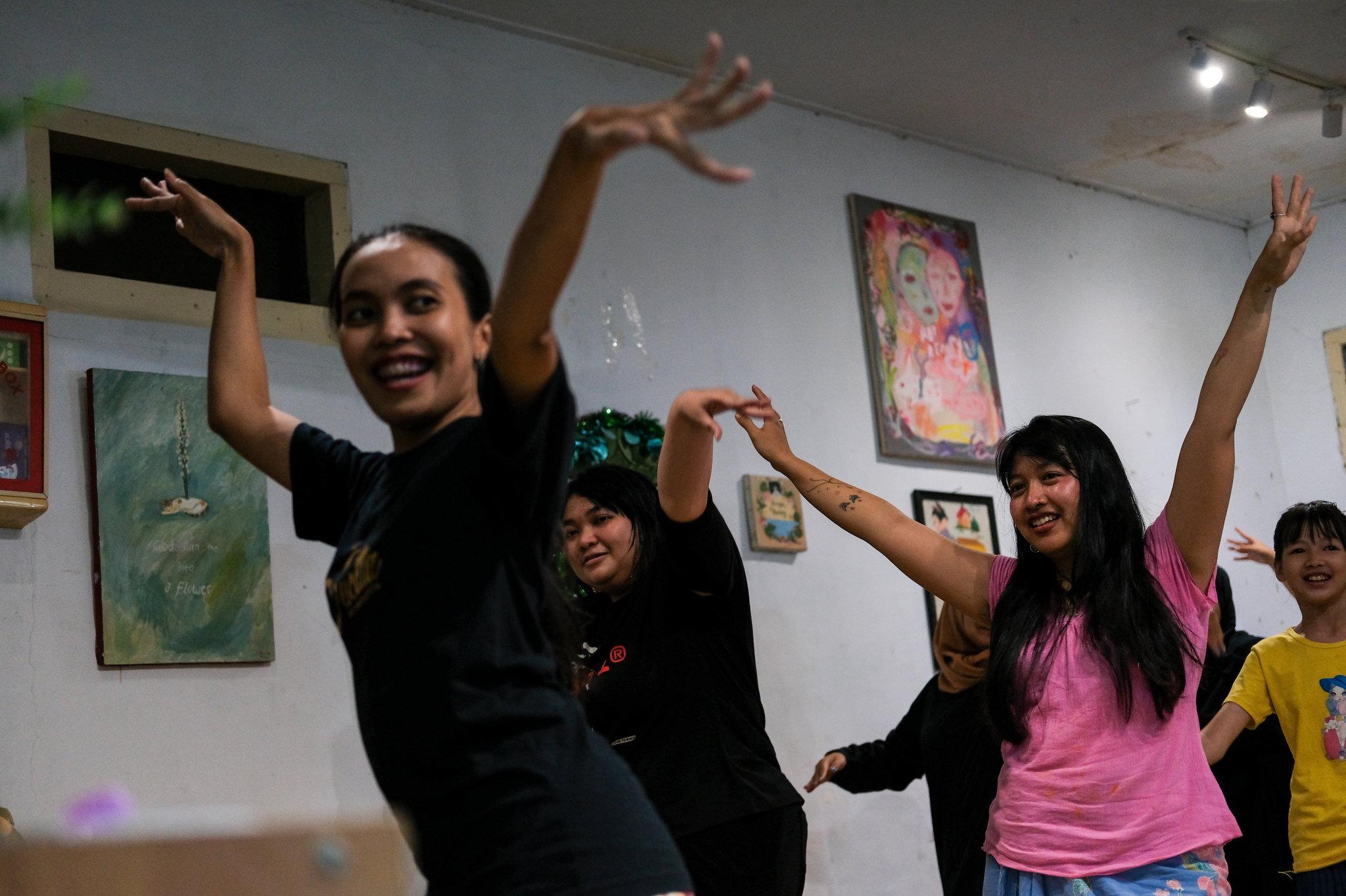
EAST JAKARTA, INDONESIA — At a dimly lit community space called Kongsi 8 in a flea market, Hai Rembulan opens an event featuring the teaching of a Sundanese traditional dance called Jaipongan.
If anyone asks what the event is, Rembulan, known as Bulan, says to answer honestly: It’s a dance practice based on worry about the condition of Indonesia today. Censorship is widespread here, especially on topics of women’s experiences, queerness and sexuality, she says.
Bulan explores women’s experiences, queerness and sexuality — topics often censored in Indonesia.
“My work is not accepted by many people,” she says.
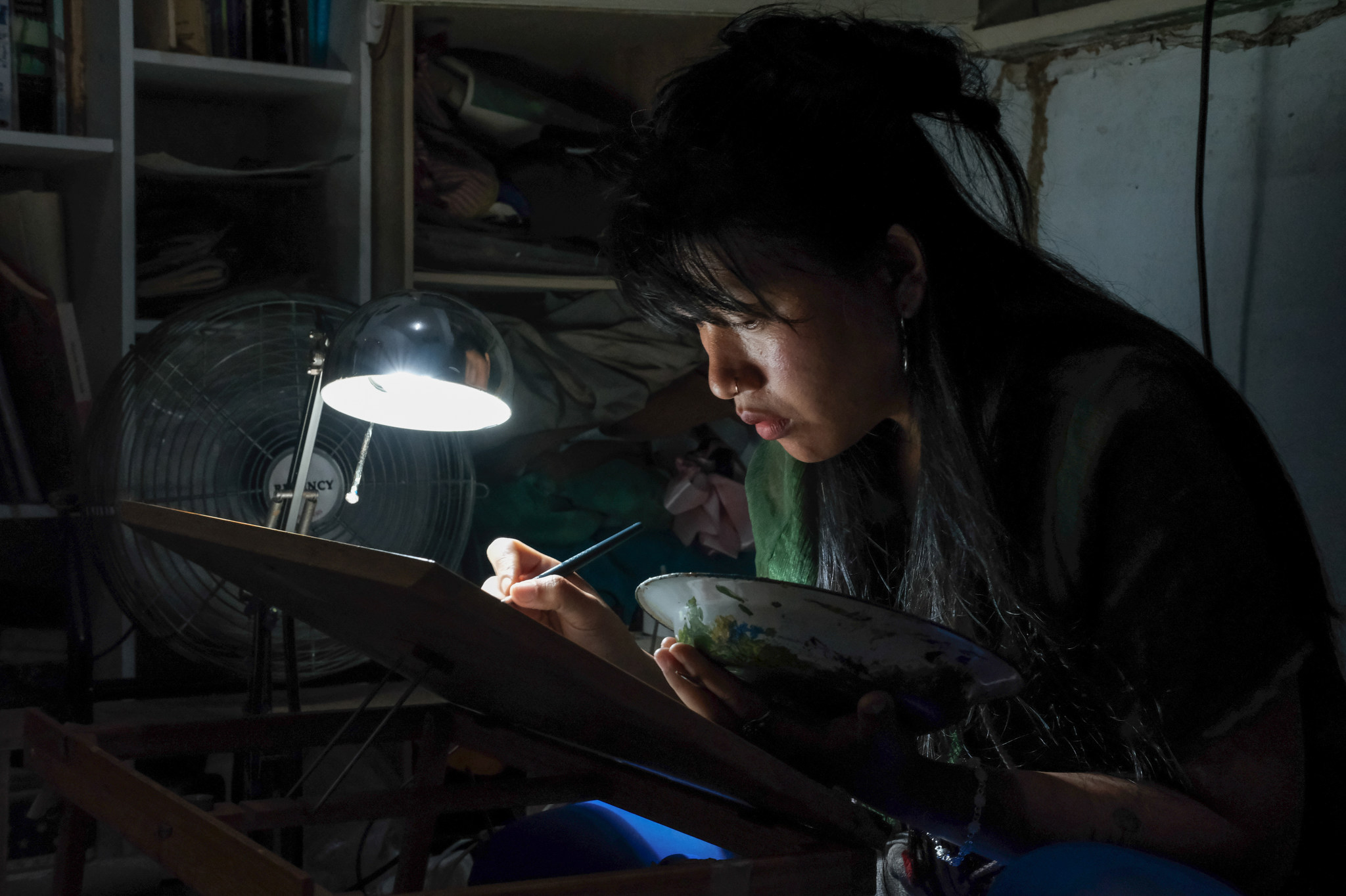
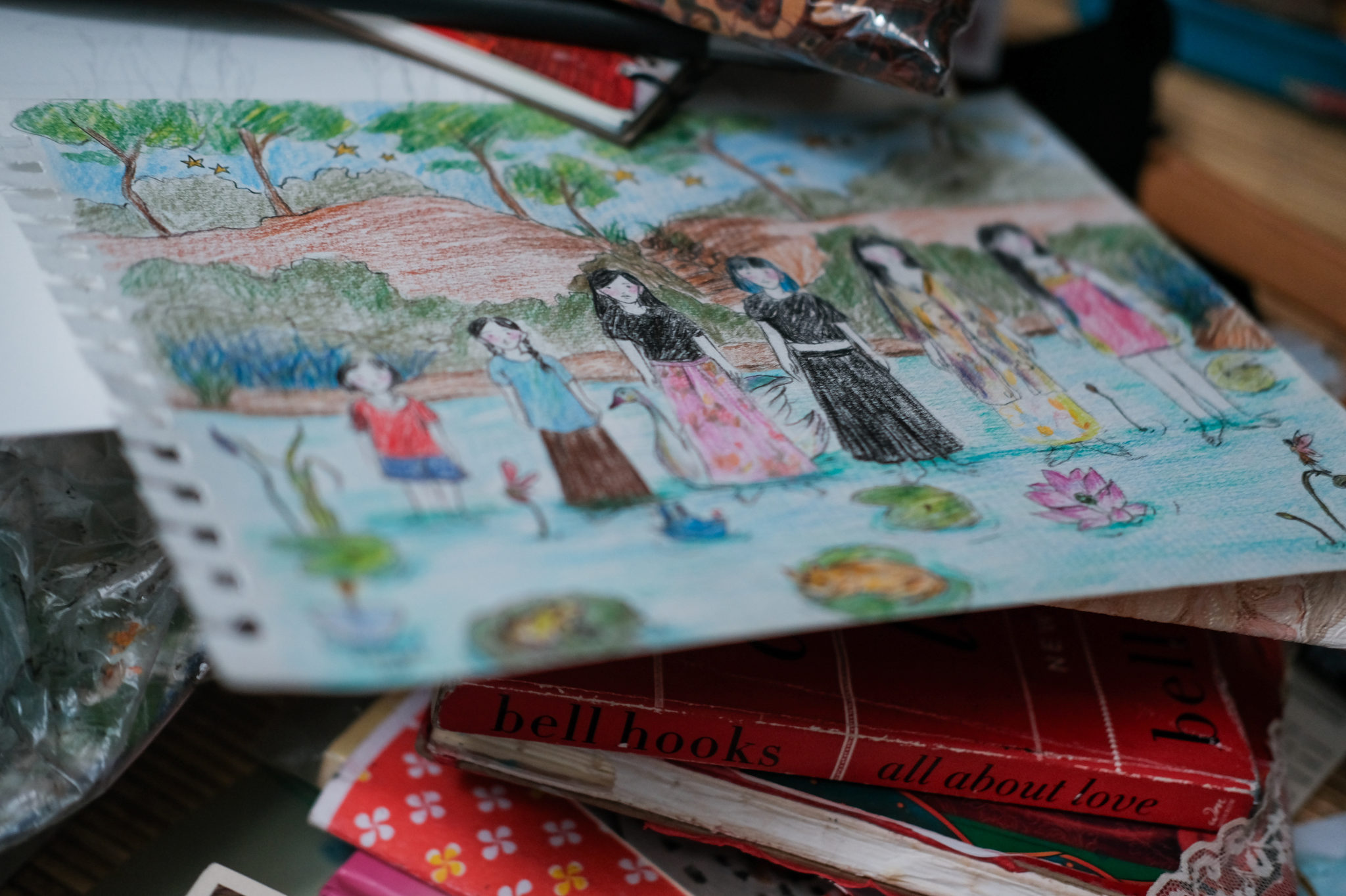
In her East Jakarta studio, artist Hai Rembulan creates work that weaves together personal memories and spiritual themes. She recently finished a painting depicting stages of her life and drew illustrations for her annual zine, Moon Phase, which she launched with the phrase, “This year is the time for the witch to rise.”
This isn’t new for Bulan, who grew up with a father who practiced the indigenous religion of Sunda Wiwitan, which was forbidden by Indonesia’s authoritarian government. Soon after he died, she says, she began to explore her own spiritual journey, eventually renaming herself Hai Rembulan (“Hello, Moon”). She believes the moon plays a crucial role in her significant life events.
Bulan and some friends opened Kongsi 8 in 2022 to create a gathering space for women and gender minority artists to create and sell art. But the art didn’t generate enough income, so they expanded to include a canteen and sell secondhand items.
The space, a historically significant location, occupies an area where looting and violence erupted during the 1998 riots, which were largely set off by financial crises and widespread corruption. People of Chinese descent were targeted, including via the mass rape of women. The Soehart regime collapsed in part due to the unrest.
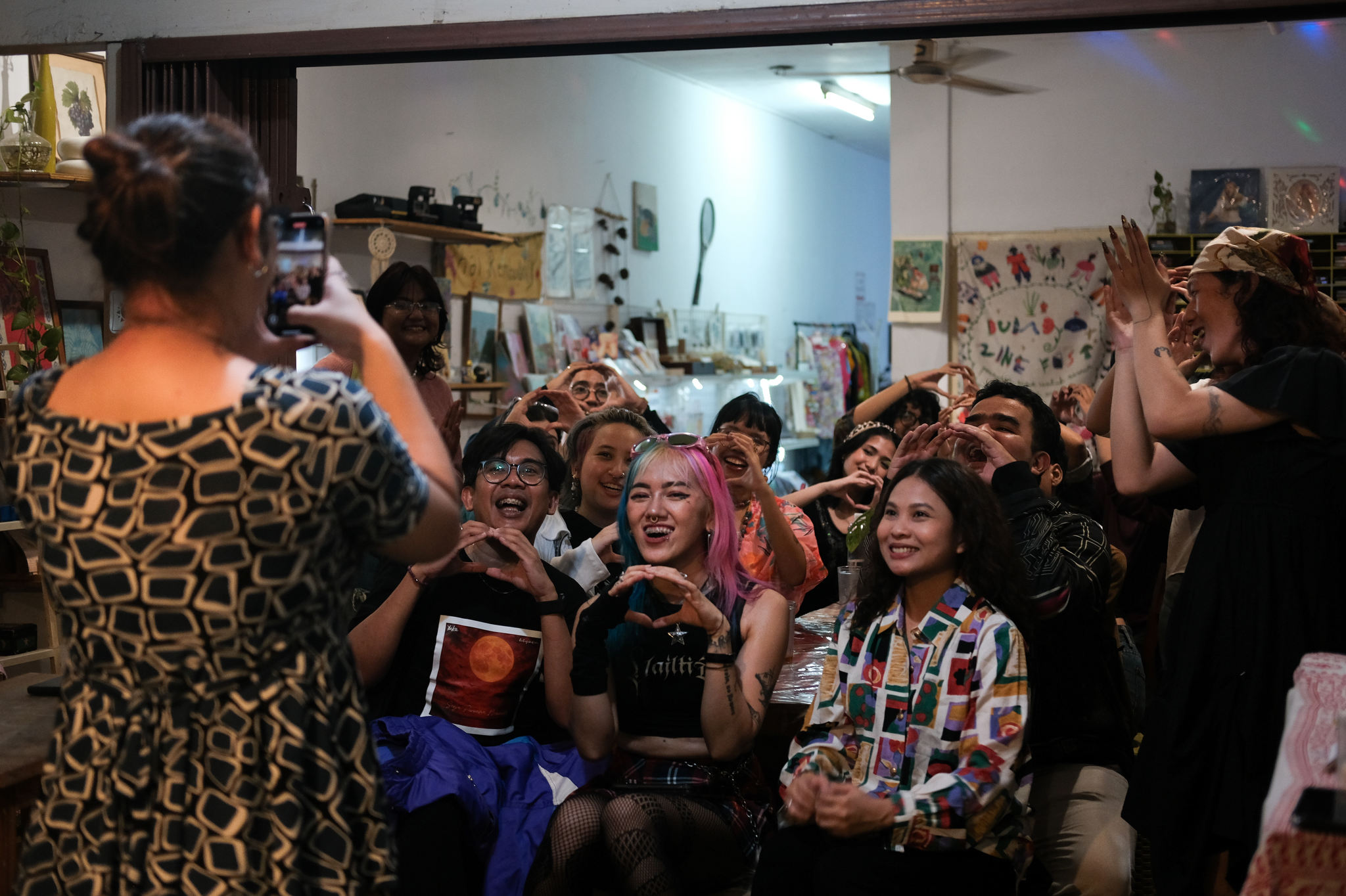
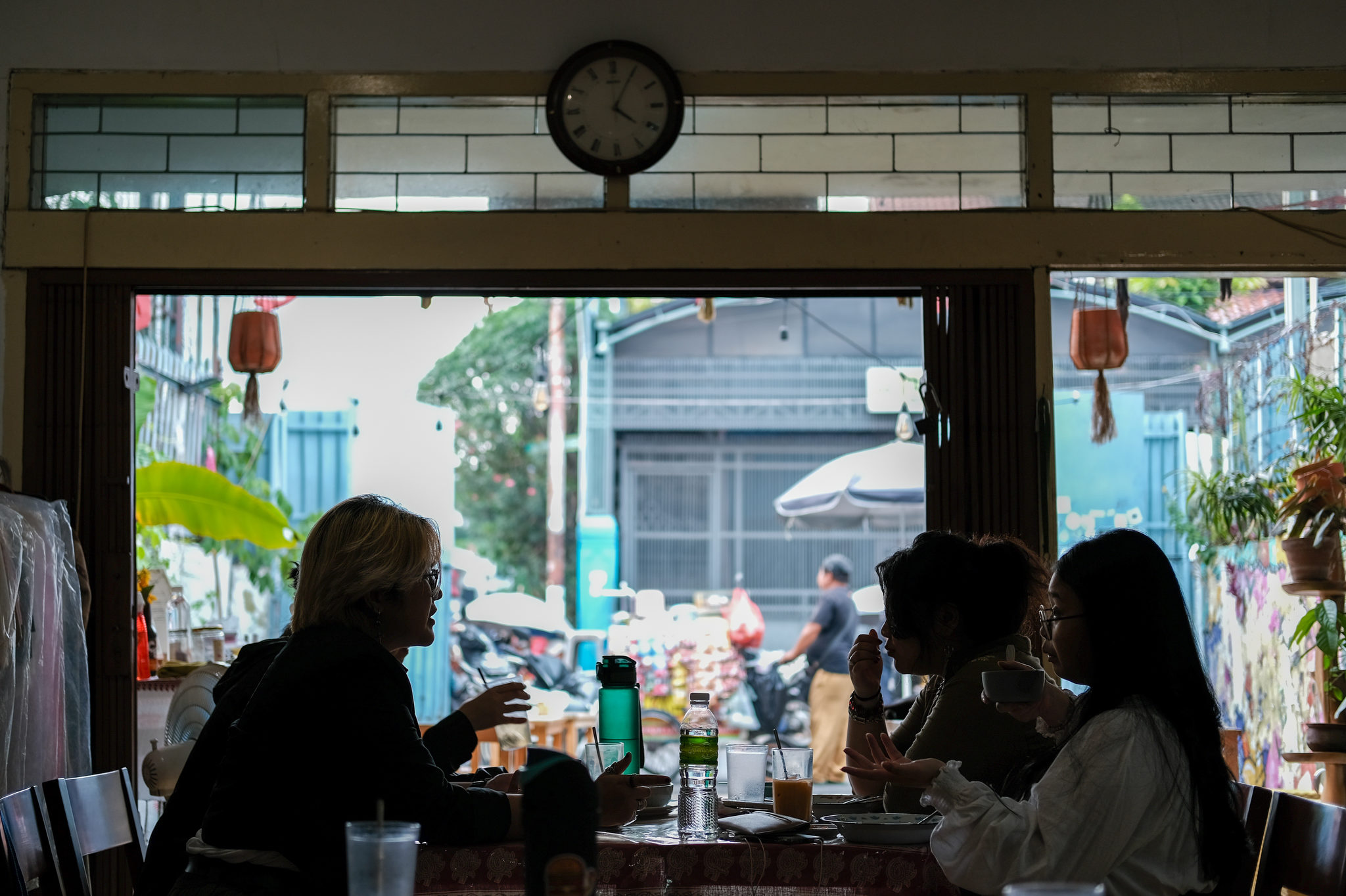
The flea market setting of Kongsi 8 reflects Bulan’s connection to secondhand goods. “My father would bring home flea market finds because they were affordable,” she says.
Bageur Al Ikhsan, a freelance writer, started visiting Kongsi 8 in 2022. He created a small library with regular book discussions in 2024. Members of Kongsi 8, including Bulan, discuss ways to mitigate risks of the country’s recently expanded Military Law, which gives broad authority to the military.
“We all stressed, we all struggled, but don’t let it stop us because that’s what the government and regime want,” Bageur says.
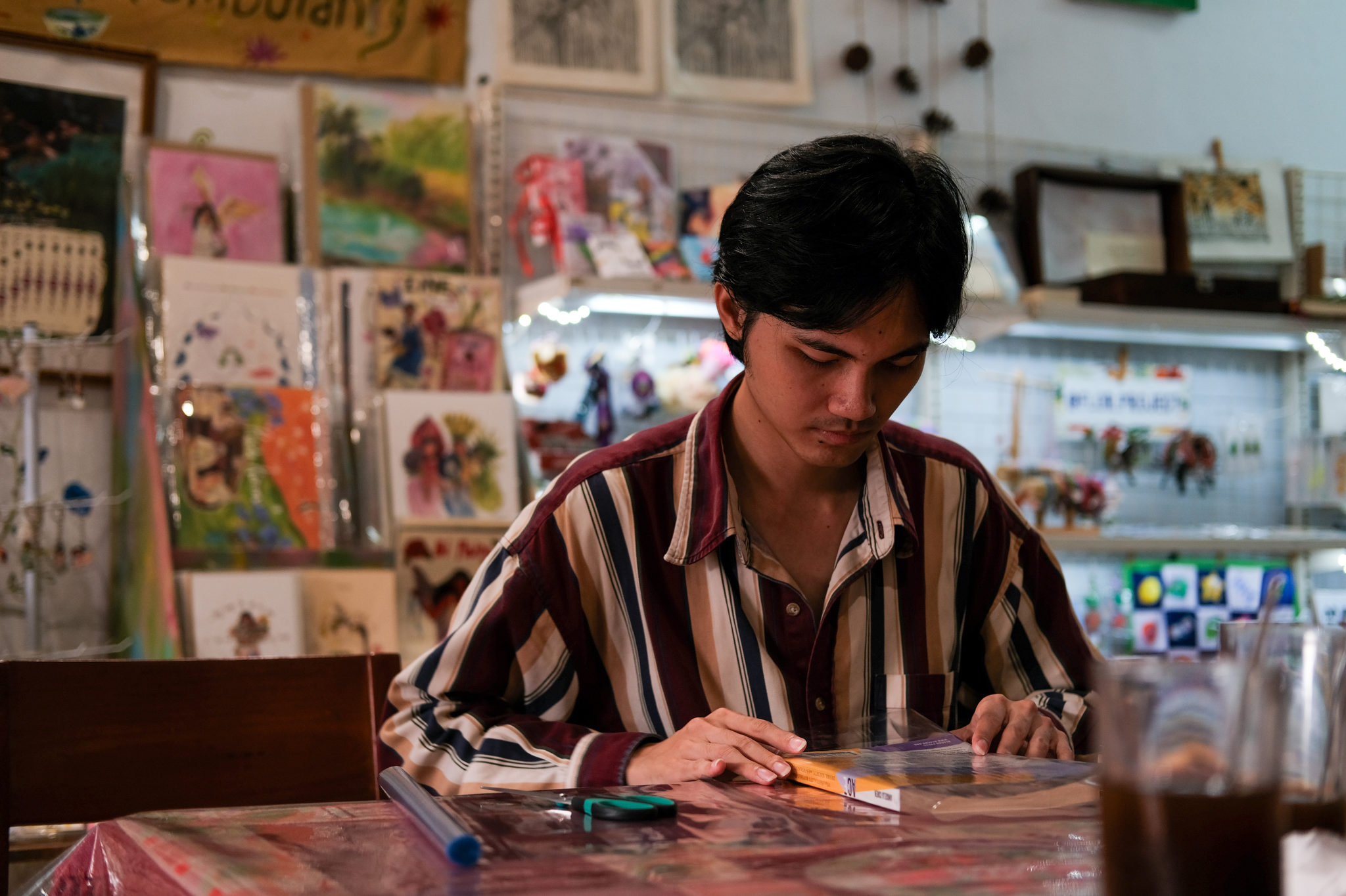
Rangga Kusuma, who co-founded the space with Bulan, emphasizes that given Indonesia’s current political climate, a support system like Kongsi 8 is more crucial than ever.
“With many regulations that will affect our existence as queer individuals and the future of this space,” he says, “I think it is important to have a support system that understands the importance of this space for us, as creative workers, to face the changes together.”
Editorial Team
Reporter:
Editor:
Fact-Checker:
Copy Editor:
Photo Editor:
Fadiyah Alaidrus is a Shifting Democracies Fellow based in Jakarta, Indonesia. They are recognized for their incisive reporting on gender, human rights, and environmental issues in Indonesia. Their work has been featured in prominent national and international outlets, including Al Jazeera English, The Wall Street Journal, New Naratif, and Mongabay.
Fadiyah is best known for the 2023 series Memori Tubuh Kami (“Our Bodies’ Memories”), a compelling collection of 11 investigative reports that delve into gender and sexual discrimination against children in Indonesia.
