

Fadiyah Alaidrus, GPJ Indonesia
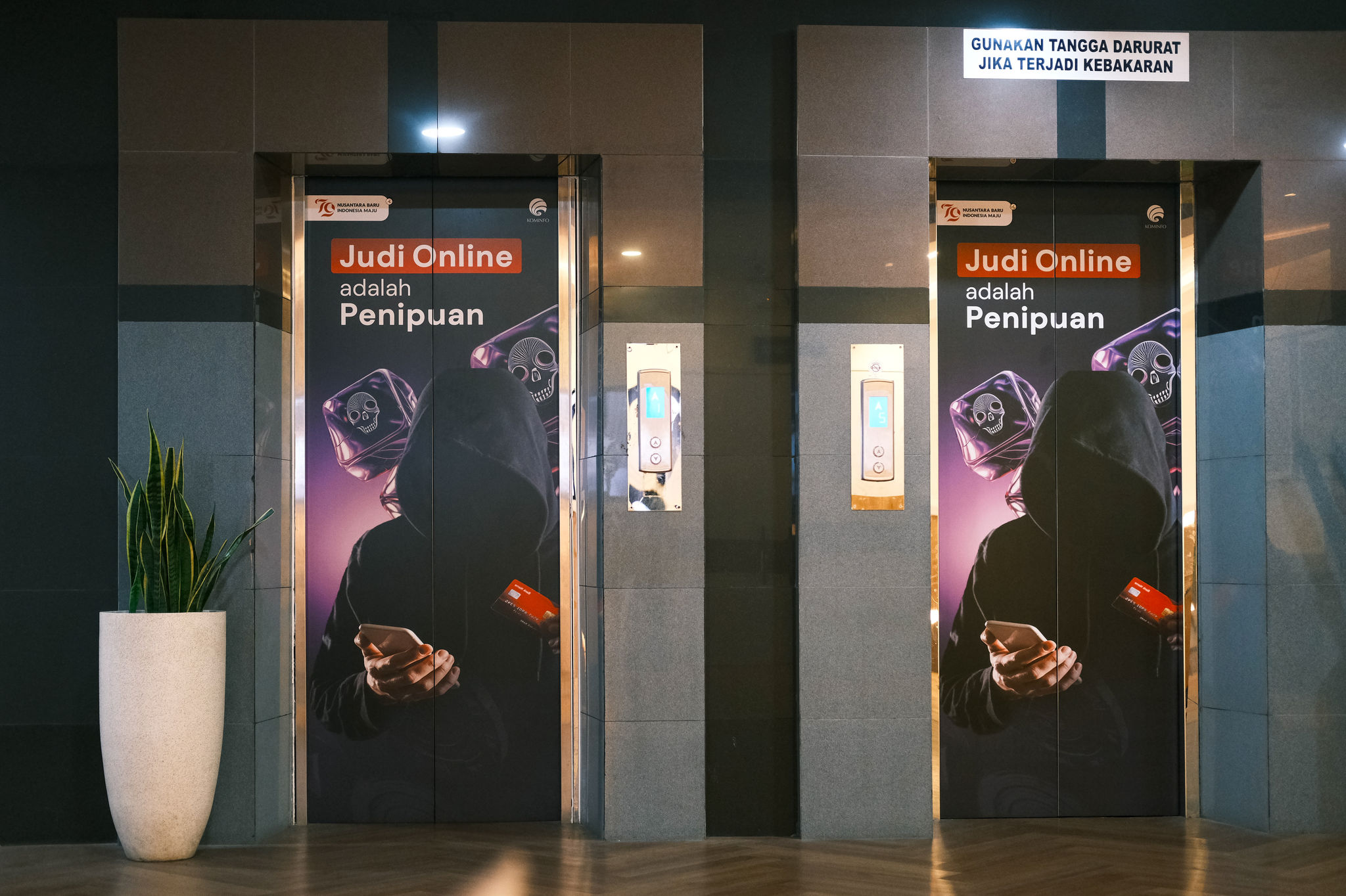
A campaign poster against online gambling appears in an elevator at the Ministry of Communication and Digital Affairs in Central Jakarta. Online gambling is one of the main targets of the ministry’s content moderation program, which critics say is also used to suppress political and social debate.
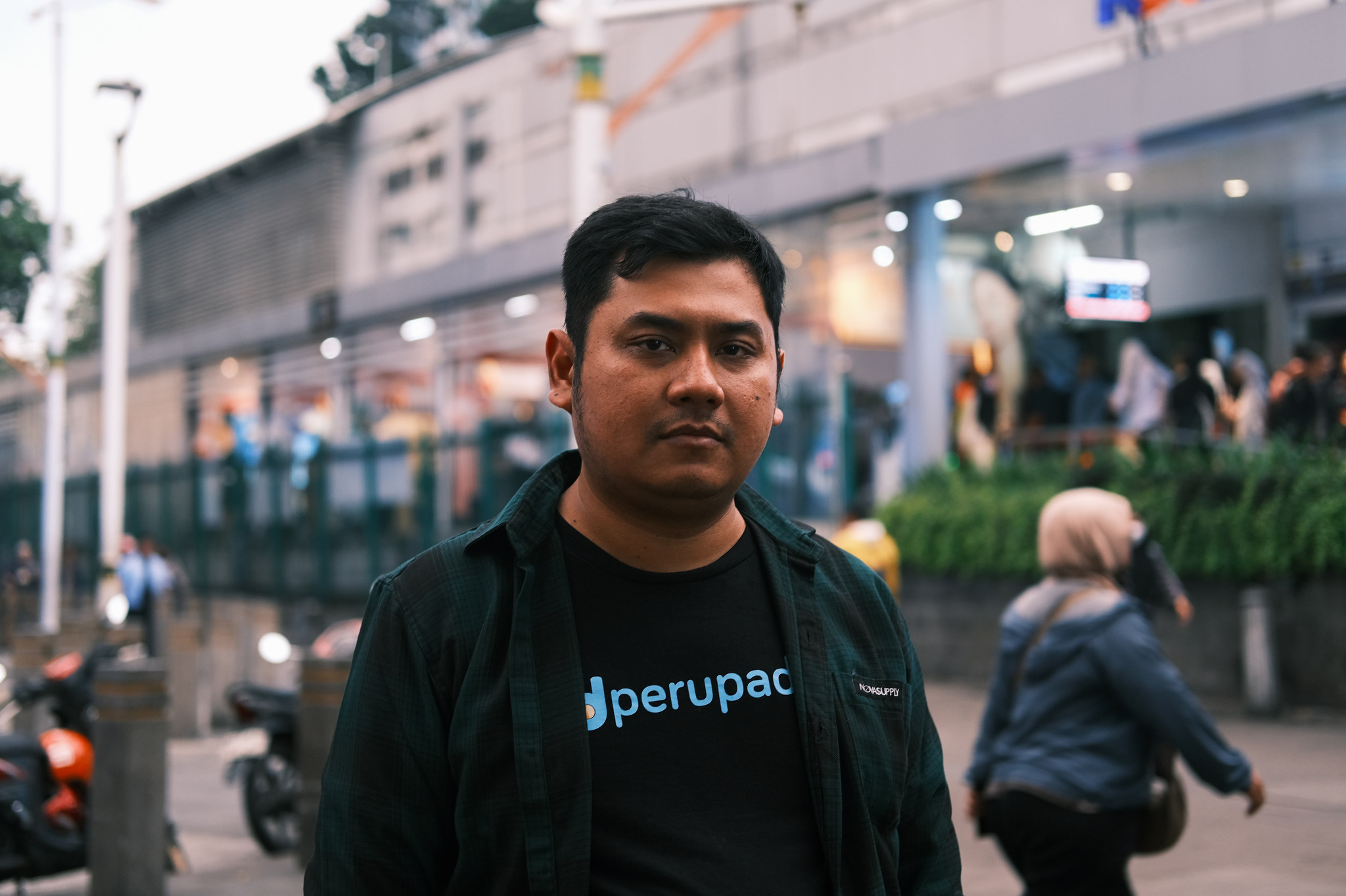
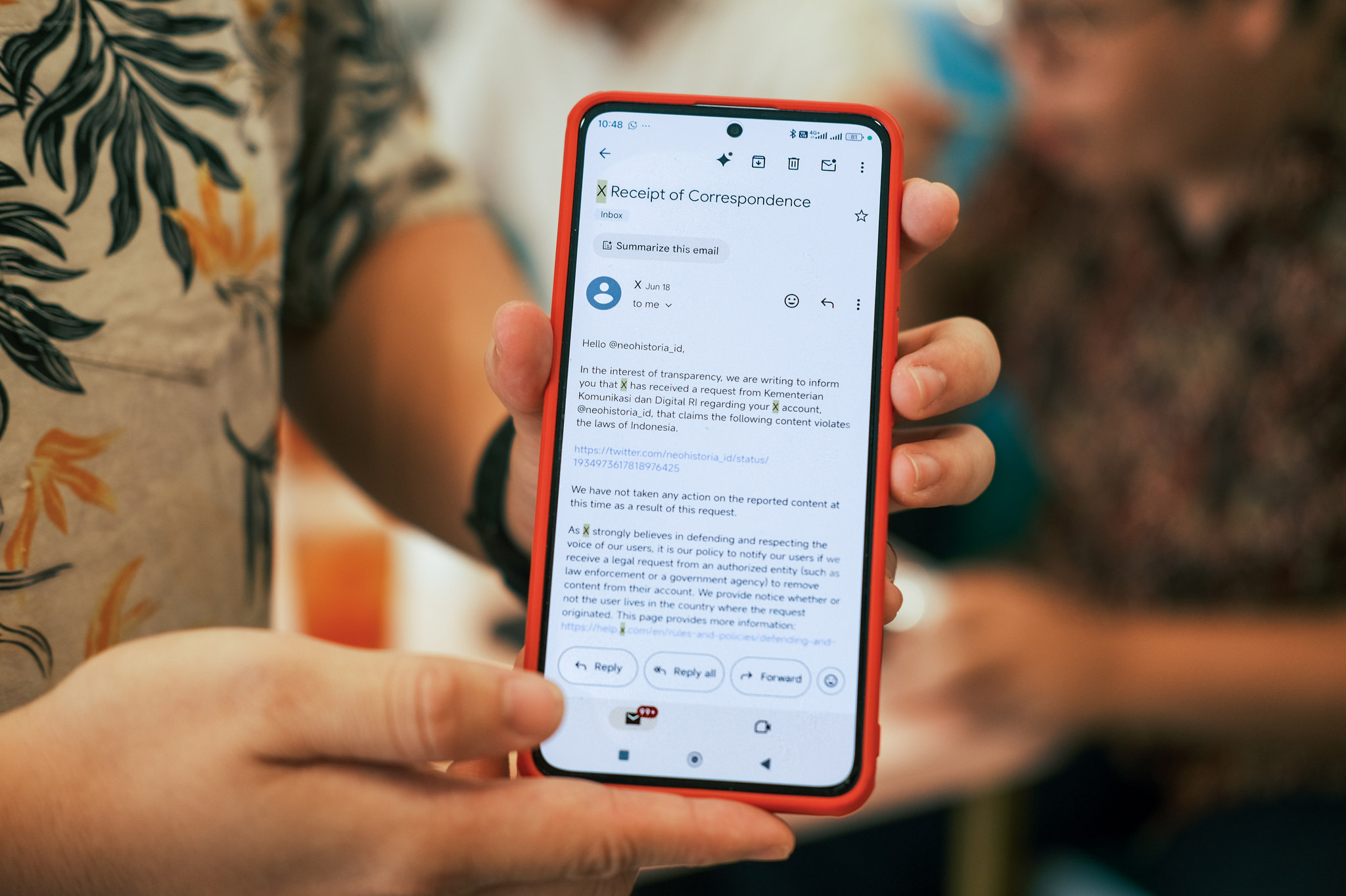
JAKARTA, INDONESIA — One evening in mid-June, Imam Safingi received an email from the social media platform X, informing him that Indonesia’s Ministry of Communication and Digital Affairs demanded that his data visualization company, Perupadata, take down a post. The post, the ministry alleged, violated Indonesian law.
The post featured a quote from Minister of Culture Fadli Zon questioning the truth of the mass rapes that occurred during Indonesia’s 1998 riots, which led to the ouster of President Soeharto. In the post, Perupadata contrasted that claim with a report published by the National Commission on Violence Against Women.
“Our intention is simply to show the facts point to an event that the official denies,” Safingi says.
Perupadata is not alone. Another digital outlet focusing on historical content, neohistoria Indonesia, received a similar takedown request from X after posting about the 1998 mass rapes.
These cases reflect a broader pattern. The Ministry of Communication and Digital Affairs has used X’s content moderation policies — meant to remove harmful content — to also take down political and social discourse, including about the 1998 mass rapes, as well as criticism of the government and environmental issues.
In the first half of 2025 alone, the ministry requested the removal of 186,496 pieces of “negative content.” While platforms processed 76.3% of these requests, according to government figures, not all content was ultimately removed.
Safingi did not comply with X’s request to remove the post. It doesn’t violate any laws, he says. So far, he adds, the government hasn’t made any additional demands.
In Indonesia, he says, the content moderation policies of the ministry are “very vulnerable to being used as an authoritarian tool.”


Under national regulations, the Ministry of Communication and Digital Affairs requires social media platforms to remove what it views as negative content. Social media platforms must establish offices in Indonesia, appoint government liaisons, and remove content or terminate users upon the ministry’s request. In total, 17 platforms are required to comply with the ministry’s requests.
The ministry initiates the use of an application to ensure that every platform meets the requirements and obeys takedown requests. The program remains in a trial phase until October, after which non-compliant platforms face sanctions ranging from fines to complete blocking.
“In the digital monitoring sector, the most difficult function is maintaining the balance between democracy and protection,” says Mediodecci Lustarini, known as Ides, the ministry official overseeing the program.
The ministry targets what it classifies as “negative content,” which includes terrorism, pornography, gambling and material related to race, religion or background. While the ministry conducts its own social media monitoring, it also processes complaints from other government institutions.
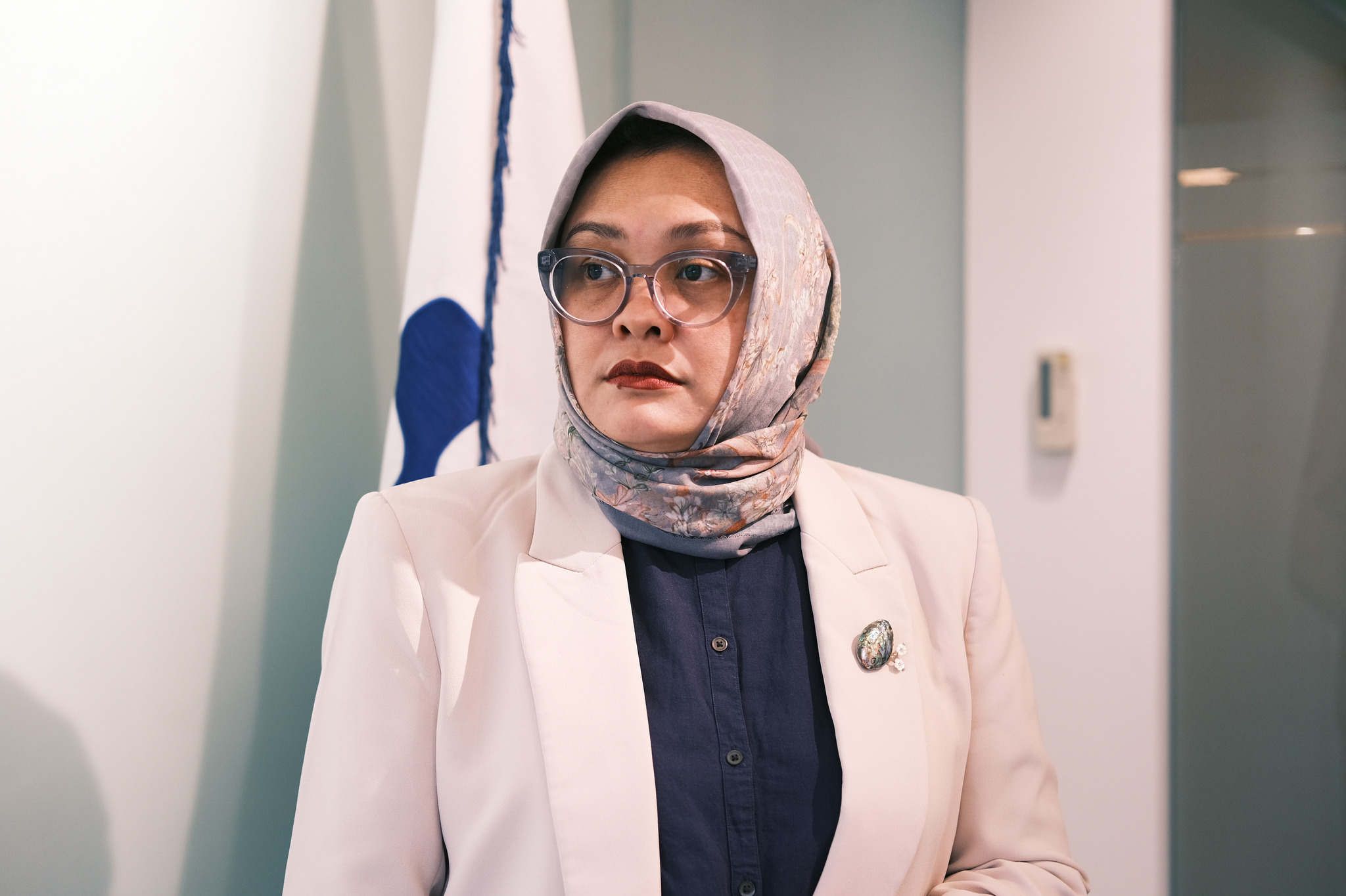
Both Perupadata’s and neohistoria Indonesia’s posts were reported by other government institutions to the Ministry of Communication and Digital Affairs. That ministry verified each of the reports before sending the requests to the platform. The posts that are targeted for removal, Ides says, are related to “sensitive issues of race, religion and ethnicity.”
Ides denies that the ministry’s content moderation program eliminates freedom of speech.
“We are open to every constructive input, particularly to strengthen regulations and freedoms related to the termination of access,” she says.
The ministry refused to disclose detailed data about its moderation activities, including the specific type of content it has moderated this year. It also hasn’t disclosed the reason that it requested posts by Perupadata and neohistoria Indonesia be removed.
Daniel Limantara, neohistoria Indonesia’s founder, acknowledges that his organization’s post did contain content related to race because it notes that the 1998 mass rapes targeted Chinese Indonesian women.
But that content is historical fact, not hate speech, he says.
“If we made a mistake, then tell us what the mistake is. It’s not our job to beg the explanation to you,” he says.
Government efforts to moderate politically-sensitive content it’s trying to erase is now a pattern, says Nenden Sekar Arum, executive director at Southeast Asia Freedom of Expression Network, called SAFEnet.
In the neohistoria Indonesia case, the digital outlet published similar content on Facebook in 2020, but did not receive any takedown requests. In another case in June this year, a researcher, Zakki Amali, received a takedown request regarding his post about nickel mining in West Papua. Amali has posted frequently about nickel problems in Indonesia, but he only received the request when the issue became a trending topic in both national media and social media in Indonesia.
The government’s content moderation, Amali says, is a “shortcut to defuse the situation or to suppress public discourse on issues.”
Safingi, of Perupadata, says the content moderation has the potential to dramatically change the country.
“With Indonesia being a democratic country — and I hope it still truly is democratic — this will endanger democracy itself,” he says.
Fadiyah Alaidrus is a Shifting Democracies Fellow based in Jakarta, Indonesia. They are recognized for their incisive reporting on gender, human rights and environmental issues in Indonesia. Their work has been featured in prominent national and international outlets, including Al Jazeera English, The Wall Street Journal, New Naratif and Mongabay.
Fadiyah is best known for the 2023 series Memori Tubuh Kami (“Our Bodies’ Memories”), a compelling collection of 11 investigative reports that delve into gender and sexual discrimination against children in Indonesia.