Democratic Republic of Congo
While supporters say M23 is fostering development, others see the armed group laying groundwork for a permanent occupation.
By Merveille Kavira Luneghe, Contributing Reporter
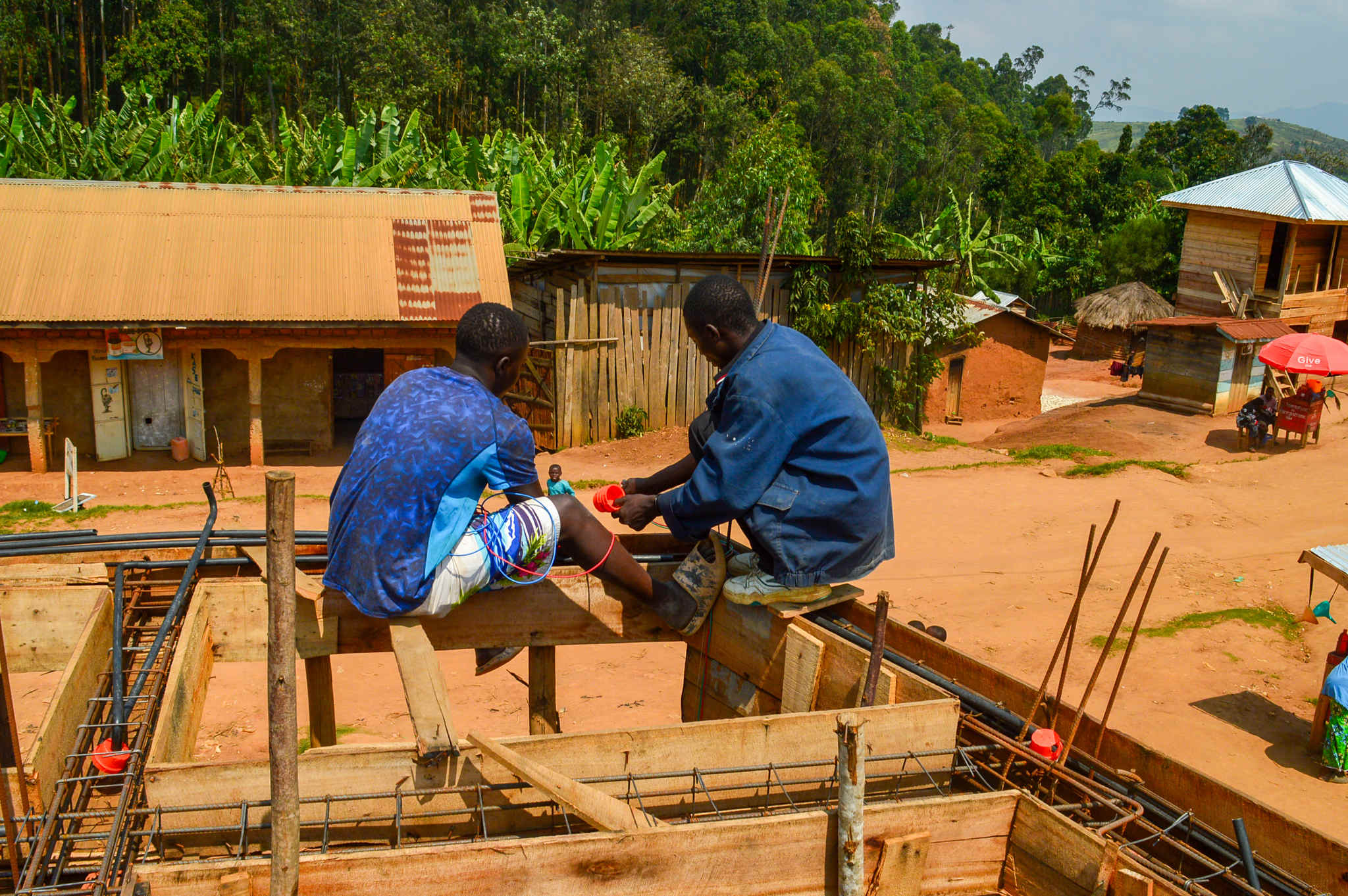
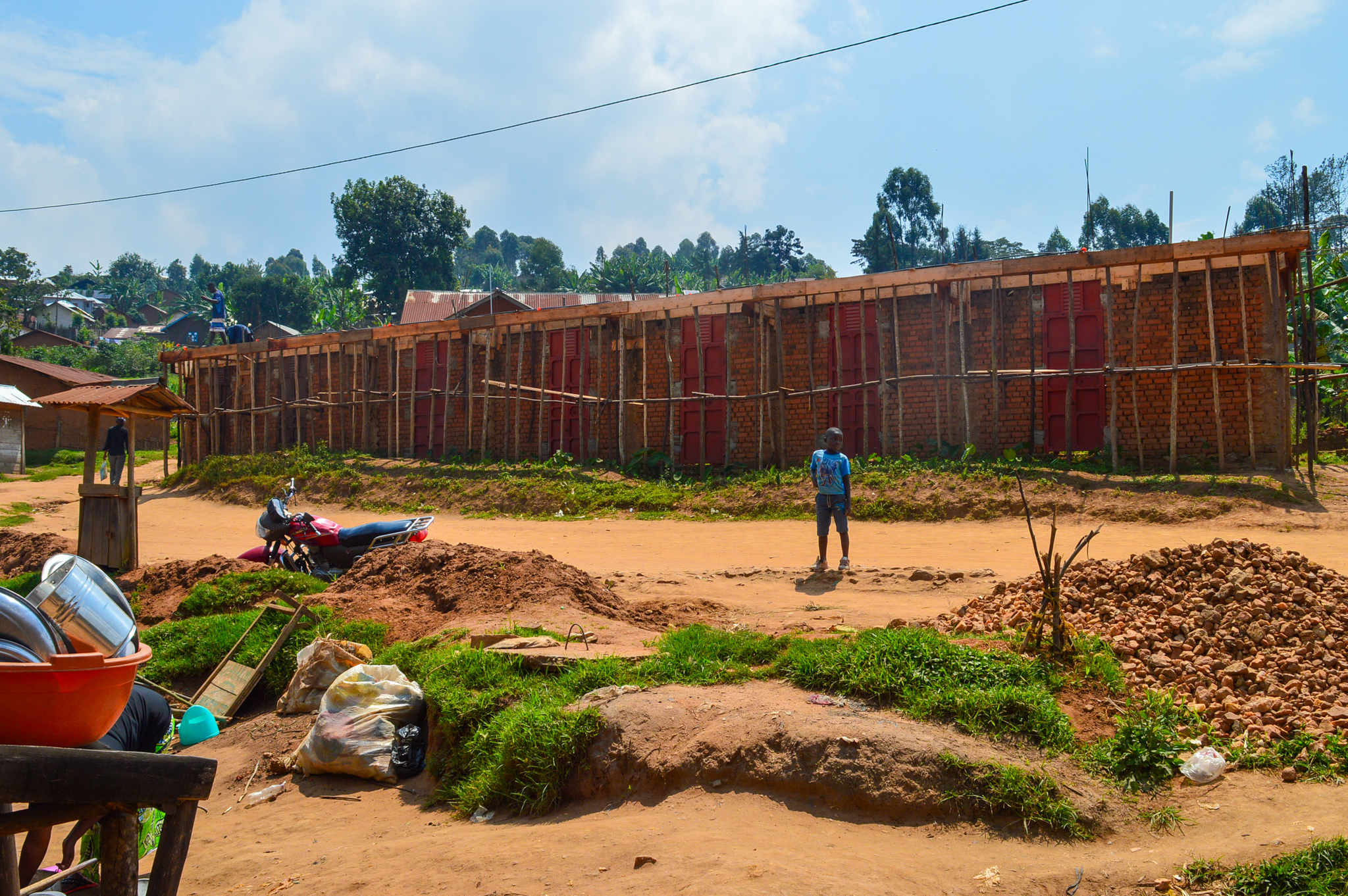
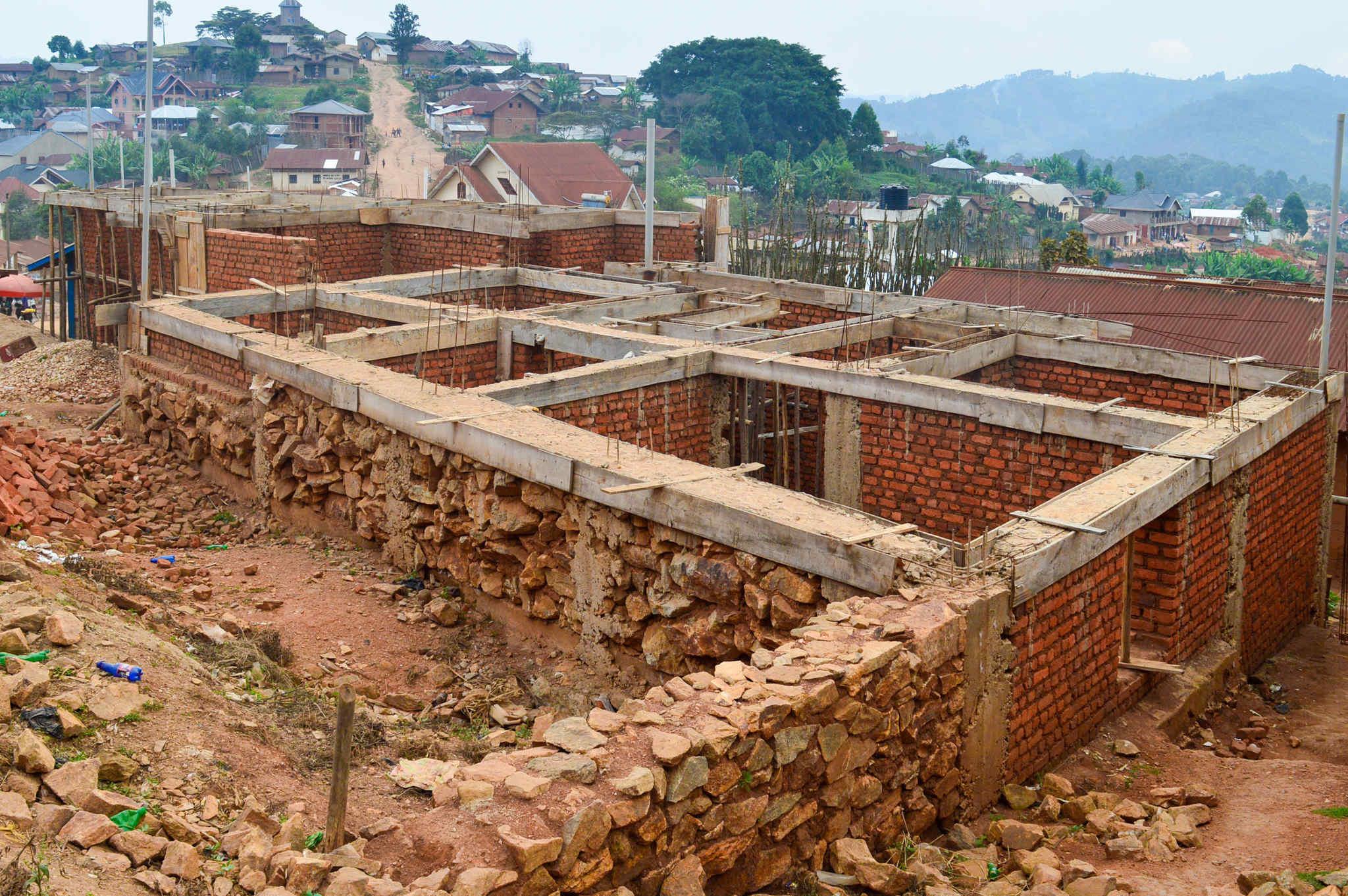
LUBERO, DEMOCRATIC REPUBLIC OF CONGO — Construction is booming in Kirumba, where more than 30 buildings are under construction, and brick houses are springing up like mushrooms. The boom is in stark contrast to the usual lethargy of the small town in a region beset by war.
Residents credit the change to the March 23 Movement, an armed group that tore through this region in June 2024 before seizing power in Goma, the capital of North Kivu province, seven months later. Together with the Congo River Alliance, known by its French acronym AFC, M23 has established a parallel administration in what it calls “liberated areas.”
Building fees are now lower, and some taxes have disappeared.
“The M23 is helping where the government was harassing people,” says Nguru Kasati, a mason.
The change is a “great relief” for builders, says Muhindo Talima, who also works in construction. “Even though they are rebels, at this stage, we thank them.”
M23 is responsible for shocking violence: People were killed in cold blood in public as the group pushed through village after village. Homes and fields were destroyed with impunity, and terrified people hid. Maintaining daily life was near impossible, with M23 controlling roads, demanding bribes and slaughtering those who defied them.
Now, the group wants to be taken seriously as the region’s government against a backdrop of ongoing security crises. But behind the facade of growing development lie divergent hopes and deep fears about what AFC/M23’s rule could bring.

Before M23’s invasion, Paluku Muratusi says government practices prevented him from pursuing his dream of building a permanent home for his business.
“When we started construction, many government agencies would show up and demand large sums of money,” he says.
There was the land registry, urban planning and housing, the General Directorate of Administrative, Judicial, State and Participations Revenue — the list goes on, says Jumael Malili, a merchant who sells electrical and electronic equipment, owns several brick houses in Kirumba, and has construction in progress.

An urban planning official under the previous government says construction was governed by strict laws aimed at ensuring safety, urban planning and tax collection. The former official declined to give his name due to fear of retaliation. Those taxes supported not only planning but other local services such as roads and sanitation.
The simplified procedures in Kirumba under AFC/M23 administration reflect the reality that there are many government functions the group does not perform. Without performing preliminary studies or conducting meaningful oversight beyond collecting permit fees, the official questioned the soundness of buildings constructed under AFC/M23.
But AFC/M23 officials say facilitating home construction is proof of their commitment to development.
“We are revolutionaries,” says Célestin Kasereka Katsongo, a civil registrar and economic development officer in Kirumba. “The old administration harassed people. We came to fight this bad governance. They demanded a lot of money that didn’t even go into the public treasury. Let people build without problems.”
Innocent Mpfizi Munyandekwe, Kirumba’s M23-appointed mayor, also praises the construction boom, citing 37 building projects underway across town.
“We ask anyone who wants to build to come to our office,” he says. “We simply make sure they have the documents proving ownership of the plot, and that’s it.”

M23, defeated in 2013, resurfaced in eastern DRC in late 2021. Its renewed attacks came in Rutshuru territory in North Kivu province. Since then, the conflict has forced some 2 million people from their homes, according to the International Organization for Migration. DRC has consistently accused its neighbor Rwanda of backing the group; those allegations are supported by a report from the United Nations Group of Experts, convened to advise the UN Security Council on DRC.
In June, DRC and Rwanda signed a US-brokered peace deal to end the conflict. The terms of the deal required that both countries end support of non-state armed groups, but M23 and AFC continued operating in DRC without pause.
In December 2023, M23 struck an alliance with AFC, then a new group led by Corneille Nangaa Yobeluo, the former head of DRC’s electoral commission, who was sanctioned by the United States in 2019 for delaying elections and embezzling funds to back his favored candidate. Though AFC ostensibly carries out political functions in M23-controlled territory, distinctions between the groups are hazy on the ground. At the national level, AFC brings together armed groups, opposition politicians and civil society, using M23’s military gains to strengthen its negotiating position with the Congolese government.
M23’s early demands focused on amnesty and the integration of its fighters into the Congolese army and appointments in the national government. Nangaa, meanwhile, has called for “rebuilding of the state” and addressing unspecified “root causes” of DRC’s recurring conflicts.
According to the UN Group of Experts, Nangaa’s involvement gave M23 a veneer of political legitimacy and allowed Rwanda to obscure its own role while reframing the conflict as a Congolese problem. But it also brought out tensions in the coalition. Nangaa hopes to take power in Kinshasa by force; M23 and Rwanda support regime change but not through a military campaign pushing over 1,600 miles (2,600 kilometers) west to the capital, according to the UN.
Over time, the alliance’s demands have evolved to more closely echo Rwanda’s objectives, according to the UN report. Messaging to recent recruits calls for the neutralization of FDLR, another armed group blamed for its role in the Rwandan genocide, and the overthrow of the Congolese government. The alliance also has plans to create an autonomous region in eastern DRC.
Despite resistance from the Wazalendos, or “patriots,” self-defense groups allied with the military, M23 has continued to advance, capturing numerous communities in eastern DRC, including Kirumba. In January, M23 seized Goma, the provincial capital of North Kivu, before advancing toward South Kivu’s capital, Bukavu, which it conquered a month later.
In most cases, Congolese authorities fled as M23 approached, leaving them free to set up a parallel administration to manage local affairs, from construction permitting to policing and administration of the region’s lucrative mining resources. Some officials from the deposed government joined AFC/M23 and now work directly for the armed groups. Elsewhere, civil servants who refused to cooperate were replaced, while civil society leaders and customary chiefs were tracked, threatened or replaced, according to the UN report. In Nyiragongo, AFC/M23 administrator Ephrem Kabasha reportedly abducted and tortured civil society leaders. The armed groups have also occupied public buildings and destroyed archives, erasing institutional memory and land records — actions tied to their plans for resettling Congolese refugees from Rwanda into North and South Kivu.
While government schools and health clinics in occupied areas continue to function on a limited basis, and Congolese civil servants who remain in their posts continue to receive salaries, some agencies, like public banks, have ceased operations altogether. Many civil society organizations have also closed.
On August 12, AFC/M23 announced steps to establish their own judicial system in the territory under the coalition’s control. In a joint statement, Bertrand Bisimwa, the civilian president and political leader of M23, and the AFC’s Nangaa named 25 members to a commission that will set up courts and tribunals in land seized in the conflict: “After more than six months of security and social stabilization, the restoration of judicial authority is a strategic priority.”
Since their arrival in Kirumba more than a year ago, AFC/M23 has not seemed particularly interested in tax collection. In the void, residents eager to build permanent structures began doing so without AFC/M23 permits. Some construction projects started under government control and halted due to the war were restarted. Now, a mix of residential and commercial construction is in progress in nearly every neighborhood of Kirumba.
But the AFC/M23 administration has not taken the same approach everywhere: In Goma, for example, merchants are already complaining about the exorbitant taxes imposed by the armed group. Meanwhile, the war has ground important parts of the economy to a halt. When M23 seized Goma and Bukavu, banks shut down. By July, according to the United Nations Group of Experts, no bank was operating in territory under AFC/M23 control.
Military and diplomatic efforts to resolve the crisis have been underway for months, with the Congolese government calling for the total withdrawal of M23. The DRC-Rwanda agreement signed in Washington, D.C. in June aimed to ease tensions between the two countries. At the same time, the DRC-M23 Declaration of Principles in Doha, signed in July under the auspices of Qatar, called for a ceasefire and outlined a roadmap for bilateral negotiations that were supposed to start in August. Both sides have since accused the other of launching attacks in violation of the agreement.

In Kirumba, local M23 leaders stated at a recent press briefing that their group would never leave the area, no matter what happens. Some residents perceive their tolerant stance toward construction as a strategy to win over locals.
“That’s no reason to legalize a rebellion like the M23,” Masika Kakurusi says. “They are rebels nonetheless, so everything they do should not be applauded by true patriots. Let’s not betray our country.”
Kakule Maronga warns, “Even if the M23 seems to be pampering us today, tomorrow they will be worse than our former leaders. All these concessions are just to flatter us, but one day, if they stay here, they will show their true colors and people will cry.”
And Kavusa Kalungero says, “We want the M23 to leave here. Our concern is peace, not houses.”
During a press briefing in July, M23’s Munyandekwe announced new taxes, such as a market stall tax of 500 Congolese francs (approximately 17 US cents) per day, in the areas under his control. Samuel Mali, 25, who works in a clothing boutique, says, “Since they arrived, M23 never made us pay taxes. But it has already started demanding US$5 per month per shop.”
Paluku Wanzire, 64, sees the new costs as a sign of what’s to come.
“A rebellion is a rebellion,” he says. “You can see that they are starting to be demanding. People are mistaken in thinking that these people are going to make life easier. Their departure is the only solution.”
Editorial Team
Reporter:
Editor:
Researcher:
Fact-Checker:
Copy Editor:
Photo Editor:
Merveille Kavira Luneghe is a long-time Global Press Journal reporter based in Kirumba, Democratic Republic of Congo. She specializes in migration and human rights coverage from this deeply complex conflict zone. Merveille is the winner of hte Clarion Award for online journalism for her powerful account of the Congolese refugee crisis. She was recently awarded the Certificate of Merit by the National Union of Congolese Press. Merveille was on the teams that received a Webby Award for best news website in 2024 and the Media Hero of the Year honor in 2021 for global coverage of the pandemic. Merveille continues to offer community reporting from a part of the world that few others can. Over the years, she has established herself as a vital voice in DRC’s ongoing narrative.
