Editorial Team
Publication Date
November 24, 2025
Yam Kumari Kandel, GPJ Nepal
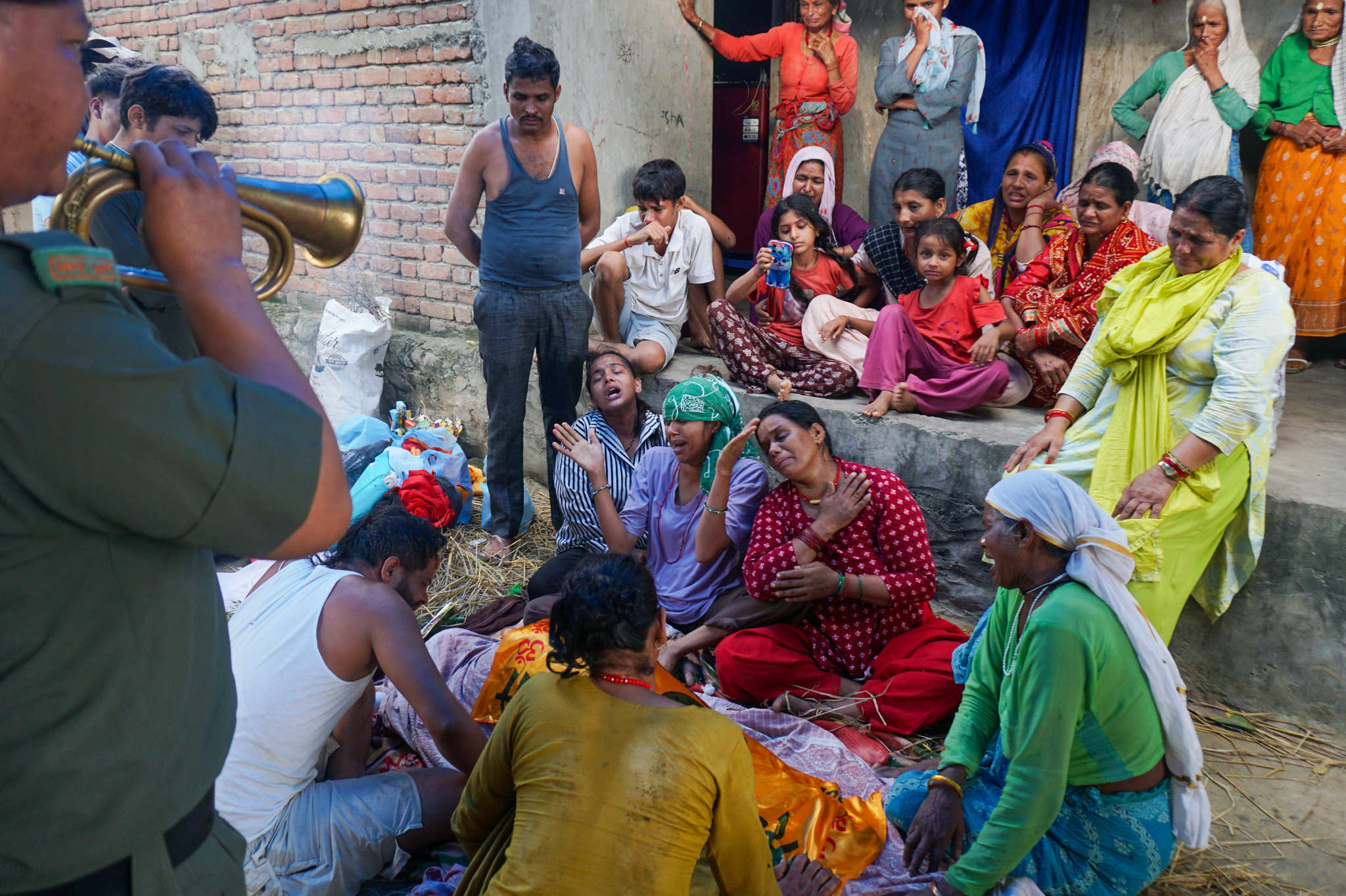
Relatives during funeral rites for Lalata Prasad Chaudhary in Nepal. The city provides portable freezers to families to ensure sons working abroad can return home for last rites.
DHANGADHI, NEPAL — In the heart of this small community, cries of mourning pierced the warm evening air. The entire village seemed to sink in grief.
Outside one house, a group of people wore blue-and-black masks. They stood in tense silence. From within the house came a strange, overpowering stench that made people gag. Swarms of flies hovered, relentless, around the building, completing the scene of sorrow and decay.
Inside the house lay the body of Lalata Prasad Chaudhary. His lifeless form waited there for the return of his three sons, who were working abroad in India and Malaysia. They had to perform Chaudhary’s final rites. And for the three days it took two of them to arrive, the body waited in a deep freezer.
Around 3.5 million Nepalis, mostly young adults, work abroad. Their parents wait for their return, not only during life but also in death. To help ensure that families can be together for final rites, the government has provided a total of 101 mortuary freezers to municipalities in districts with high rates of labor migration. It costs 600 Nepali rupees (about US$4.26) per day to store a body in one of the government’s portable freezers.
Since 2024, 466 families have used the government’s portable deep freezers, according to municipal records. Eight of those freezers are in Dhangadhi, in the far west of the country.
In some places, local organizations have purchased freezers as well. In Galkot municipality, for example, a group of women that formed to raise awareness about gender equality bought a freezer and donated it to the local health post.


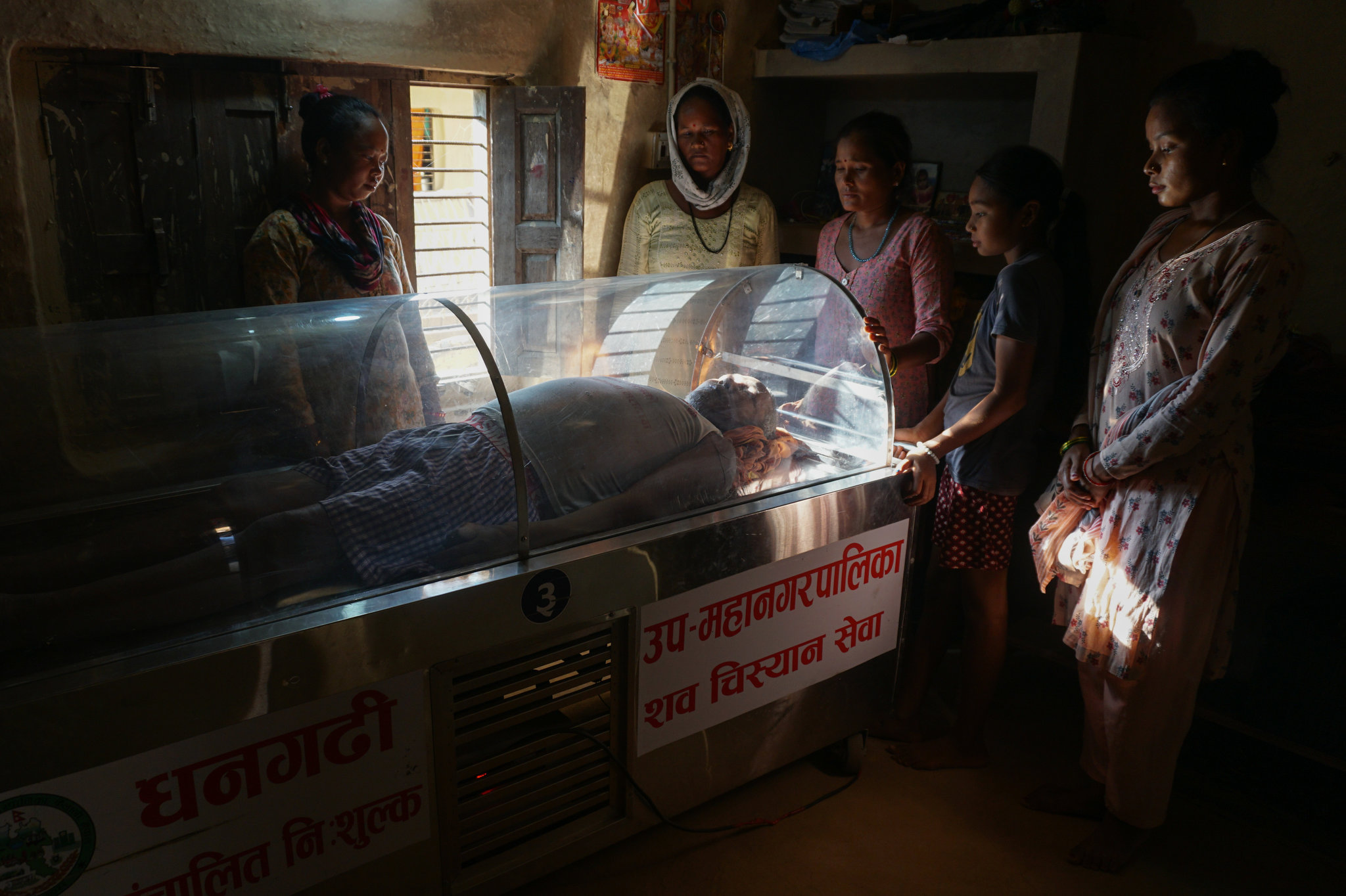
For a while, the cold preserved Chaudhary’s body. But by the third day, decay had begun, and it was all visible through the freezer’s convex, transparent top. The corpse, swollen beyond its usual size, released fluids that pooled below it — a stark reminder not only of his death but also the absence of his children.
Chaudhary’s eldest son, Bijay Chaudhary, and youngest son, Sunil Chaudhary, traveled for three days from Shimla, India, to reach home. The women of the house, including Lalata Prasad Chaudhary’s daughters-in-law, had already completed preparations for the final rites before the sons arrived.
Just then, the municipal police arrived at the house to collect the portable freezer. Bijay Chaudhary and Sunil Chaudhary put on gloves and spread out a large white plastic sheet in the courtyard. They rolled the freezer out of the house and into the yard.
According to Nepali Hindu tradition, the deceased’s body must be placed on a bamboo stretcher for funeral rites. Under normal circumstances where Hindu practices are observed, a body should be cremated right away. But sons also play a crucial role in performing last rites. With so many sons working abroad, something had to change.
Deep freezers preserve bodies just long enough for children to return home, says Suresh Dhakal, an anthropologist. “This,” he says, “is truly commendable.”
By the time Lalata Prasad Chaudhary’s sons returned home from India, where they work seasonally picking apples, his body had been in the freezer for three days. No one was willing to touch the decayed body. When the police requested that it be moved, they all worked together to lift the corpse out of the freezer and place it face down on the bamboo stretcher. They covered it with plastic and loaded it into a tractor. Then, with neighbors and relatives, they headed toward the cremation site for final rites.
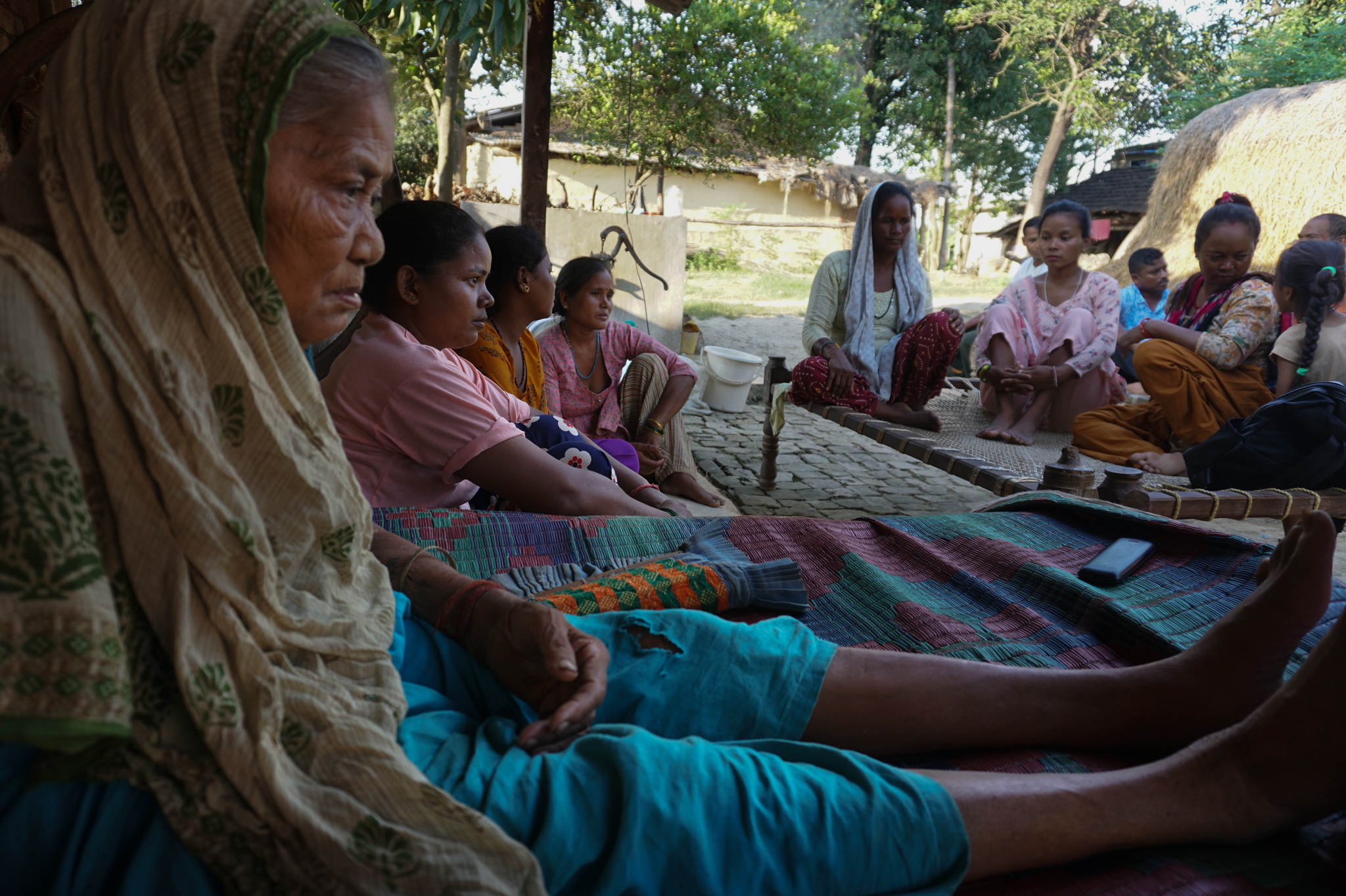
Families throughout Nepal, especially in rural areas, rely on remittances from their members who have gone abroad to work. Those remittances account for more than a quarter of the country’s gross domestic product. As a result, many villages have been left to the very young or the very old. Pratiksha Lamtange, a public health inspector at Kandebas Health Post, Galkot, says some communities are nearly empty.
In Nepal, children hold more responsibility for their parents than does the state, says Anita Ghimire, a labor migration scholar and director at the Nepal Institute for Social and Environmental Research. “Children themselves must determine that their parents need physical and emotional support.”
That said, she adds, there should be bilateral agreements between Nepal and countries where Nepali migrants often go for work, particularly Gulf countries, to ensure that workers can return for funeral ceremonies.
Bijay Chaudhary and Sunil Chaudhary have worked in India for 10 years. The third brother — the middle one — is presumed to be working in Malaysia. No one has heard from him in years.
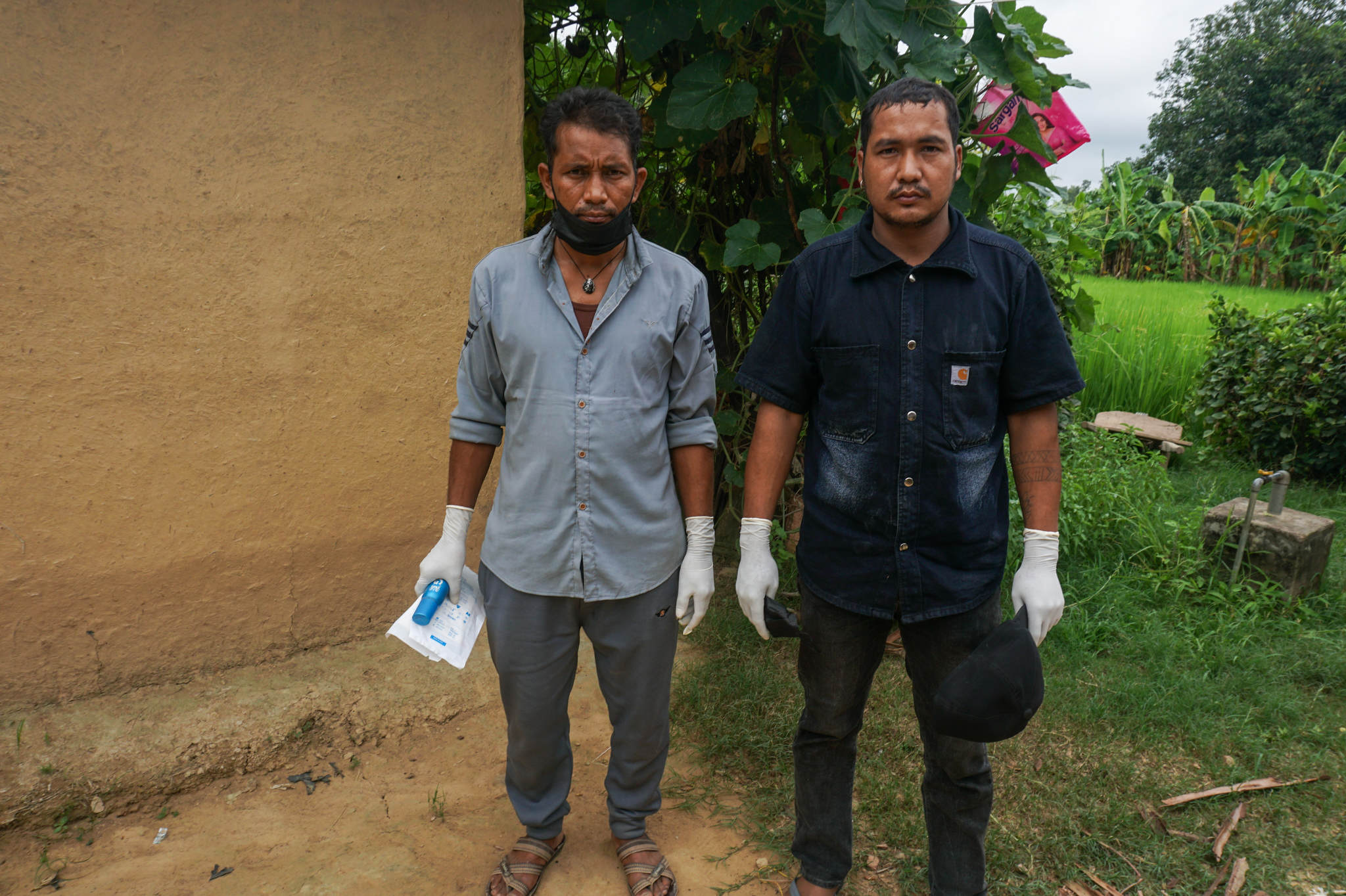
The oldest and youngest brothers return home every year for two months during the paddy planting season. Once the annual work is done, they bid farewell to their grandmother, their wives and children and, in the past, their elderly father. Their mother passed away seven years ago.
“Before going to India, our father had told us to earn money and build a permanent house in Dhangadhi city. We had never imagined that he would die so soon,” Bijay Chaudhary says.
But when he did pass away, the local government came to their aid with a freezer.
“I cannot stop young people from going abroad,” says Gopal Hamal, the mayor of Dhangadhi, “but I am trying to reunite families at the time of death.”
Yam Kumari Kandel is a Reporter-in-Residence based in Kathmandu, Nepal. She holds a bachelor’s degree in law from Tribhuvan University and previously worked for the National News Agency of Nepal. Yam focuses on migration and labor rights, especially the experiences of migrant workers and their families. She is best known for her coverage of Nepali workers’ rights in Qatar and Ukraine, as well as investigations into the challenges faced by migrants abroad.