Editorial Team
Publication Date
November 17, 2025
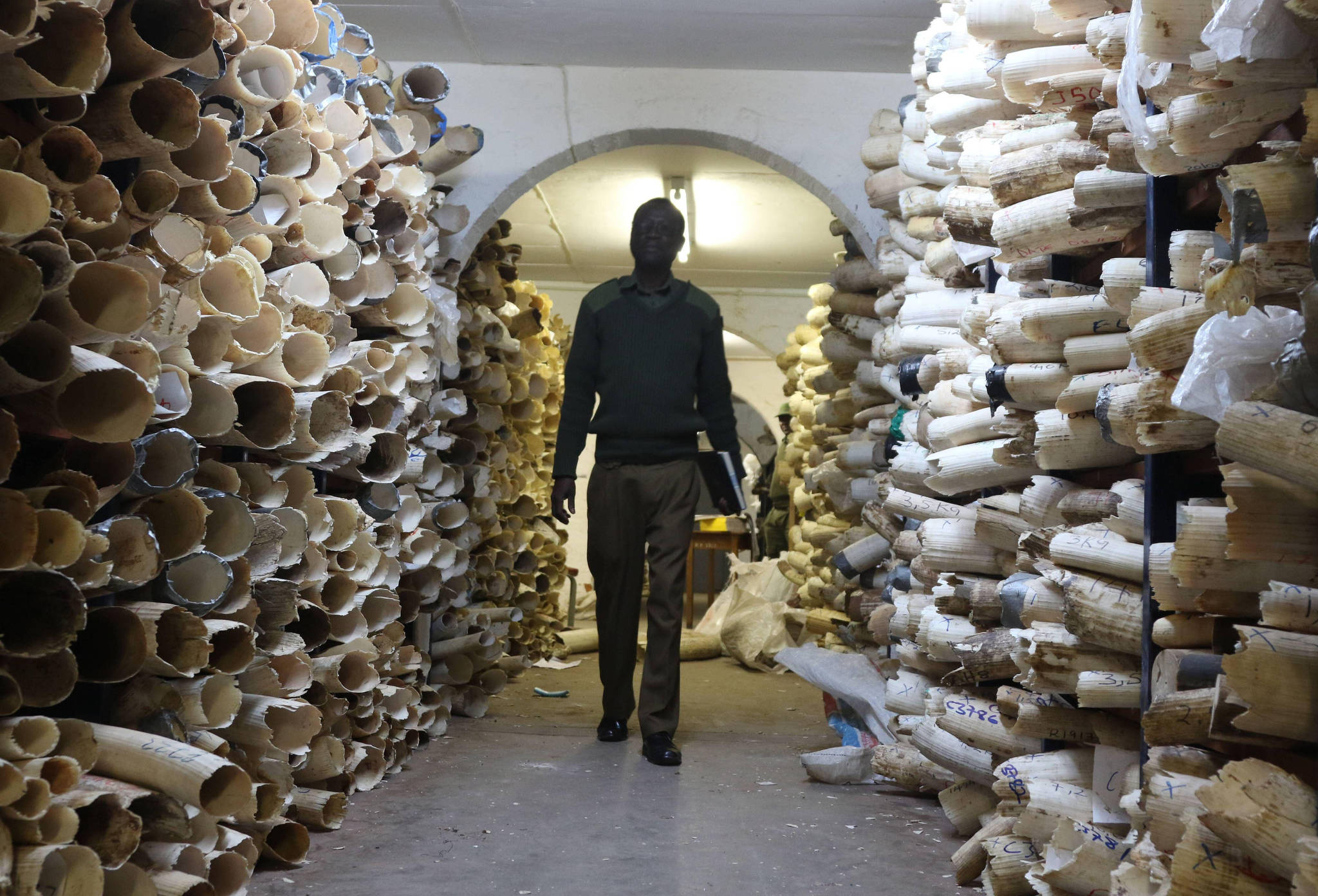
IMAGE SOURCE: ALAMY
A Zimbabwean national parks and wildlife authorities worker checks the ivory stockpile in Harare.
HARARE, ZIMBABWE — Every year, Zimbabwe spends nearly half a million United States dollars to protect more than 120 metric tons of ivory it has stockpiled in a vault at its national park headquarters in Harare.
This mountain of tusks is worth an estimated US$700 million as per government figures, but conservation advocates say the figure is likely inflated.
A 2020 assessment on illegal ivory trade by Wildlife Justice Commission shows that ivory prices fluctuate by region. In southern Africa’s black market, a kilogram of raw ivory was worth from US$75 to US$85 in 2020, according to the assessment. Based on those figures, Zimbabwe’s ivory stock could be worth about US$9 million to US$10 million in the regional market. Prices would likely be higher in Asia. In Vietnam, for example, the going rate for 2020 was about US$400 a kilogram.
Even so, Zimbabwe cannot legally sell a single tusk. A global ban by the Convention on International Trade in Endangered Species of Wild Fauna and Flora, a global treaty organization, banned the sale of ivory in 1989 at a time when the African elephant population was declining.
At the same time, Zimbabwe’s National Parks and Wildlife Management Authority, known as Zimparks, which maintains the pile, has struggled to fund basic conservation efforts. The authority runs on an estimated budget of about US$35 million a year, but has a deficit of around US$10 million each year, spokesperson Tinashe Farawo says.
Officials and other experts say a sale could help the country, which has struggled under a weak economy, to strengthen its conservation efforts, especially as elephant numbers keep rising and clashes between people and wildlife become more common.
The debate resurfaced in May at the Southern African Development Community Transfrontier Conservation Area summit, a cross-border conservation initiative hosted this year by Zimbabwe.
Speaking at the summit, Domingos Gove, the director of food, agriculture and natural resources at the SADC Secretariat in Botswana, said that the ban restricts countries like Zimbabwe from generating revenue for conservation efforts. He called on member states to keep pushing the Convention on International Trade in Endangered Species to acknowledge the region’s success in managing elephant populations.
Repeated rejections
Zimbabwe and other countries in southern Africa have many times petitioned the convention for permission to sell their ivory. But the convention has consistently rejected these proposals, mostly out of concern that it could trigger a resurgence in poaching. Other conservation watchdogs also say that even a one-time sale could ignite demand for ivory and undo decades of progress in elephant protection.
And this isn’t without reason.
In 1997 and 2008, the convention allowed a one-off sale in Botswana, Namibia, South Africa and Zimbabwe to buyers in Japan and China. This was on condition that the money raised would go directly to elephant conservation and communities that live near the elephants.
In Zimbabwe’s case, the revenue from the 2008 sale, which came to about US$486,886, went to elephant conservation, according to a 2009 convention report.
But both sales also fueled a spike in poaching in Africa, according to the convention and some conservation groups. A 2022 joint press statement by conservation groups says that the sales fed markets in China and Japan — both major destinations for illegal ivory shipments.
Recent petitions, such as those in 2019 and 2022 by Zimbabwe, South Africa, Botswana and Namibia, have been unsuccessful.
Numbers are increasing
But those pushing for a sale in Zimbabwe say while the ban was to protect elephants when the numbers were falling, their populations have been increasing.
In 1900, the country likely had no more than 4,000 elephants, following widespread declines across Africa due to massive exports of ivory that peaked in the late 19th century.
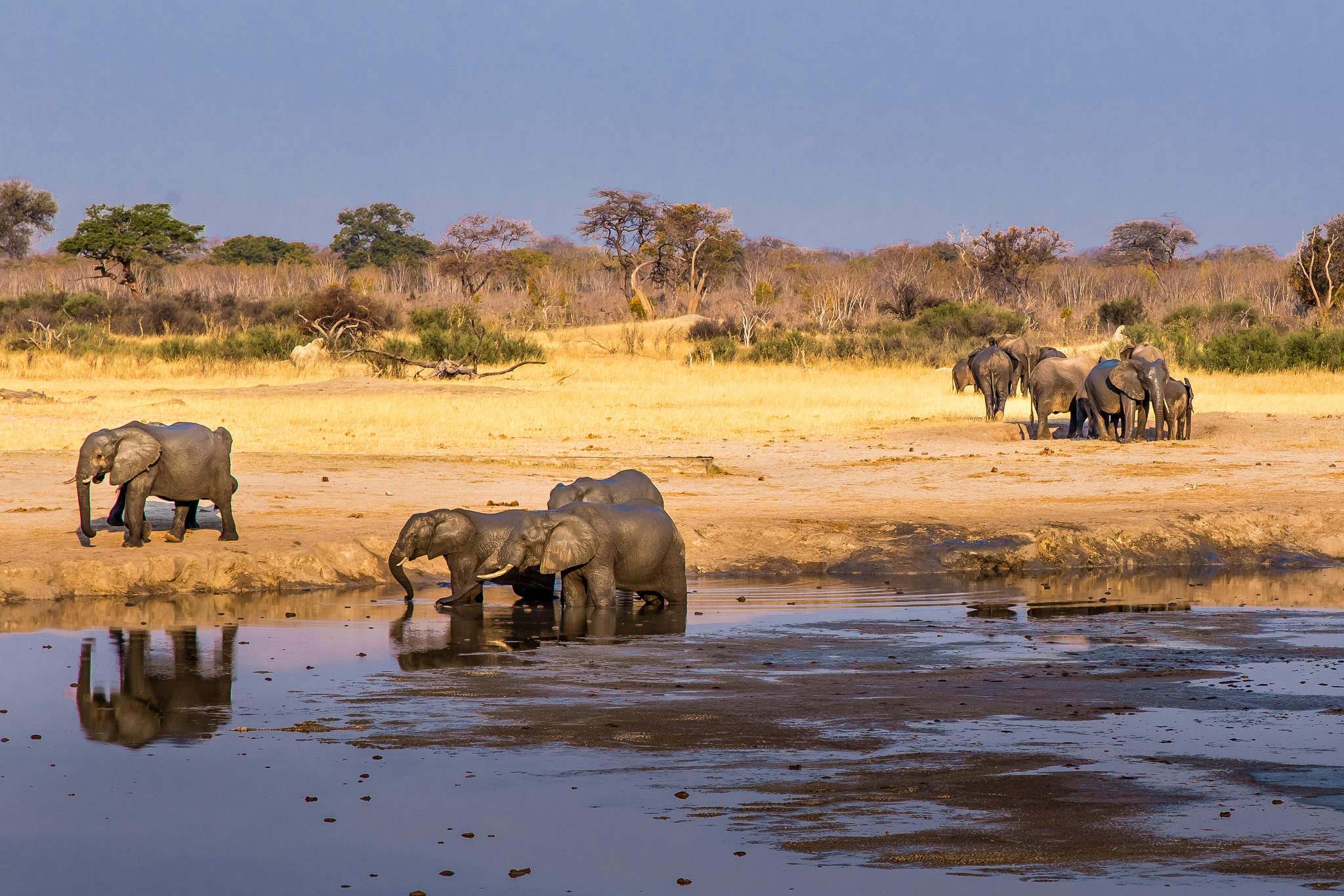
By 2014, Zimbabwe’s elephant population had shot up by over twentyfold — making the country home to the second-largest population of savanna elephants in the world, after Botswana with 130,000.
Despite a slowdown in growth after a spike in poaching beginning in 2006, Zimbabwe’s elephant population has held steady at around 82,000 — more than twice the national target set in the 1980s, according to the country’s 2021–2025 National Elephant Management Plan.
Rising numbers mean that Zimparks needs significant resources to manage its elephants, says Farawo, the spokesperson.
But Zimparks is a parastatal, meaning it does not receive direct funding from the central government. Instead, it generates its income from park entry fees, hunting fees and game product sales, to mention but a few.
At times, the authority receives financial assistance from nonprofits too, Farawo says, but that money isn’t enough to cover conservation costs.
A 2020 World Bank national parks valuation study found that Zimbabwe’s parks were becoming less financially sustainable. For example, Hwange National Park alone, where most of Zimbabwe’s elephants live, had a deficit of US$2 million in 2018. From 2015 to 2017, most of the national park’s revenue came from selling live elephants, but Zimparks stopped this because of international opposition to the trade.
Part of the money Zimparks collects goes to maintaining the country’s ever-growing pile of ivory. Whenever elephants die naturally in parks or are killed by poachers, park authorities recover the tusks and hide, transport and ensure their safe storage, which Farawo says costs about half a million US dollars each year.
What this means is that the financial burden of maintaining the ivory stocks it can’t sell keeps growing.
Zimparks didn’t respond to requests for current rates of stockpile growth, but in the late 1990s, Zimbabwe’s ivory stockpile was growing at more than 5 metric tons annually, a rate that was set to increase as the number of elephants increased.


‘Always in fear’
For communities, these growing numbers are a threat to their lives, their fields and their homes.
Last November, Michael Dzomba’s uncle was out collecting poles near his home when an elephant charged at him. He died on his way to the hospital.
Dzomba and his family live in Mbire district, a rural corner of the Zambezi Valley just beyond the boundaries of Mukanga National Game Park, where elephants have increasingly become a nuisance. Dzomba notes the park isn’t properly fenced. All they see are traces of small pieces of rusty wire, a sign that the area was once fenced.
“We are always in fear. They can camp even in areas where we fetch water,” says Dzomba, a father of one.
In the first quarter of this year alone, Zimparks received reports of 579 cases of human-wildlife conflict, with 18 deaths and 32 recorded injuries, according to a press statement.
The ban is not good for the community, Dzomba says.
“The ivory can fetch money that can help us as a country,” he says. It could help with fencing game parks and ensure the community’s safety. “There are instances when we call [rangers] in to scare the animals away but they will not have rifles or shotguns.”
But other locals do not think selling will make the situation any better. Selling will only incentivize poaching, says Fidelis Chima, coordinator of Greater Whange Residents Trust, a residents advocacy organization in Hwange, where Zimbabwe hosts most of its elephants.
If a sale were to happen, the government needs to establish strong and effective safeguards to ensure that poaching will not increase, Chima says. He worries about accountability too, saying that local communities already receive little benefit from wildlife proceeds. This would need to be improved first, he says.
Farawo says while revenue from a sale would mostly go to conservation, the community would also benefit. “If a ranger is paid, he’s sending his children to school; the ripple effect naturally will be felt.”
‘Not one penny’
Wildlife activist Sharon Hoole agrees that selling ivory isn’t a solution, especially when corruption still reigns in the country.
“Not one penny of that money will ever go to any villagers or any side of conservation,” she says.
Like Kenya — which set alight 12 metric tons of ivory in 1989, the first of several destructive fires — Hoole says Zimbabwe is better off burning its stockpile.
But to Emmanuel Koro, a Johannesburg-based international journalist and wildlife conservation author, there is simply no justification for keeping such amounts of ivory locked up with no economic benefit to Zimbabweans or for elephant conservation.
Taxpayers unfairly bear the burden of financing elephant conservation, Koro says.
The ban, he says, has fueled the very crisis it claims to prevent. It has created a demand for ivory that has triggered poaching, and given conservation groups a reason to keep asking for funding. “They are a 1 billion dollar industry that never wants to see the lifting of the ban,” Koro says.
For Farawo, the Zimparks spokesperson, it should count for something that two-thirds of the world’s elephants are in southern Africa.
“What we are pushing [for] as a country is to say, those who have elephants, [our] votes must carry greater weight than those who don’t have,” he says, referring to the votes on petitions to sell ivory that require a two-thirds majority vote. “It’s not in our interest to participate in the discussions about dolphins, for example.”
Christina Hiller is a wildlife conservation research consultant at University of Kent. She says the Convention on International Trade in Endangered Species’ approach should be reconsidered. Ideologically driven policy positions, she says, will not solve conservation challenges.
“A policy should be in tune with the beliefs of land users of the area in question,” she says, adding that conservation policies are more effective when they are framed as permissions rather than prohibitions. People, she says, act based on different belief systems on what will bring about conservation success.
“These conservation worldviews are much like the grammar of the language one speaks as a mother tongue. You continuously apply the grammatical rules of the language without being aware of them,” she says.
Last year, Reason Chitanha narrowly survived an elephant attack at her home in Nyamhunga, Kariba.
“All I remember is seeing the elephant charging toward me. I ran but could not outpace it,” she says.
It tore her leg with its horns and dragged her. She says she had to crawl to safety. Chitanha still nurses wounds from the attack. While the danger has been there since she moved to the area in 2013, it has worsened, she says. Since June last year, she says she knows four people who have been killed by elephants.
“I fail to understand why someone can block the sale of ivory which can end up helping our communities,” she says.
Gamuchirai Masiyiwa is a Reporter-in-Residence based in Harare, Zimbabwe. An internationally acclaimed economic reporter, her award-winning work includes a Clarion Award for her innovative comic feature on Zimbabwean currency. Gamuchirai holds a bachelor’s degree in Political Science and a diploma in Journalism and Mass Communication from the University of Zimbabwe. She brings deep expertise and a fresh perspective to reporting on economic issues impacting her community.